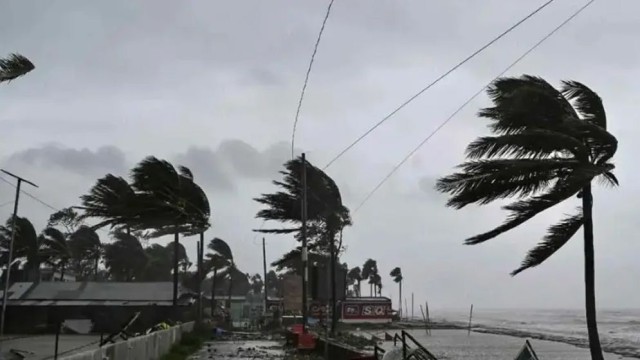
DHAKA, May 31, 2026 (V7N) – Bangladesh Meteorological Department (BMD) today forecast light to moderate rain and thunderstorms in different parts of the country over the next 24 hours beginning from 9 am.
According to a Met Office bulletin issued this morning, light to moderate rain or thunder showers accompanied by temporary gusty or squally winds and lightning flashes are likely at a few places in Chattogram and Sylhet divisions and at one or two places in Rajshahi, Rangpur, Dhaka, Mymensingh, Khulna and Barishal divisions.
The forecast also said moderately heavy to heavy rainfall may occur at places in Chattogram and Sylhet divisions.
Day and night temperatures are expected to remain nearly unchanged across the country, the bulletin added.
The highest temperature recorded on Saturday was 36.0 degrees Celsius in Koyra under Khulna division, while today’s lowest temperature was 23.7 degrees Celsius in Sylhet.
In Dhaka, the sun is expected to set at 6:42 pm today and rise at 5:11 am tomorrow.
Meanwhile, Dhaka ranked 17th among cities with the worst air quality worldwide this morning, recording an Air Quality Index (AQI) score of 86 at 10:16 am.
The city’s air quality was categorised as “moderate,” which experts attributed partly to reduced traffic congestion during the Eid holidays.
Uganda’s Kampala, South Africa’s Johannesburg and Indonesia’s Jakarta topped the global AQI list with scores of 169, 166 and 157 respectively.
According to AQI standards, a score between 51 and 100 is considered “moderate,” while 101 to 150 is regarded as “unhealthy.” Scores between 201 and 300 are classified as “very unhealthy,” and readings above 300 are considered “hazardous.”
In Bangladesh, the AQI measures five key pollutants — PM10, PM2.5, nitrogen dioxide, carbon monoxide, sulphur dioxide and ozone.
Dhaka has long struggled with severe air pollution, particularly during winter months, although air quality generally improves during the monsoon season.
According to the World Health Organization, air pollution contributes to around seven million deaths globally each year due to diseases such as stroke, heart disease, chronic respiratory illnesses, lung cancer and acute respiratory infections.
END/AJ/RH/