Dhaka, Jun 15 (V7N) — Although the formal roadmap for the upcoming local government elections has not yet been announced, the ruling Bangladesh Nationalist Party (BNP) has launched aggressive internal preparations to finalize its grassroot candidates. Since the elections will be held without party symbols, the party high command has set up three distinct evaluation criteria to select candidates, while policymakers consider a local-level coalition framework similar to the last parliamentary polls.
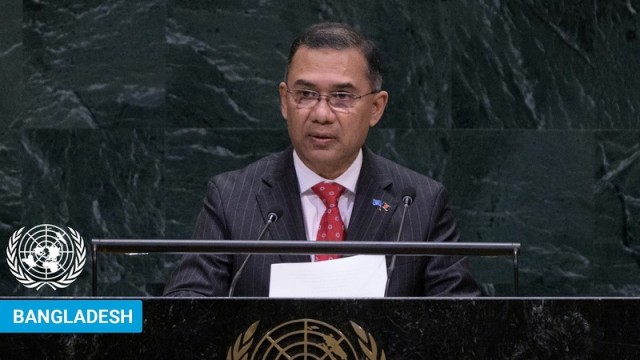
Senior party leaders confirmed that Prime Minister and BNP Chairperson Tarique Rahman issued a strict warning against any unauthorized interference or administrative overreach during an organizational meeting. Addressing party leaders, he stated, "The local government elections will be completely neutral and competitive," underscoring the government's commitment to democratic transparency.
While the Election Commission (EC) has yet to visibly initiate its official preparations or announce a schedule, the government has signaled its intention to organize the Union Parishad elections between November and December. Schedules for municipalities, upazilas, and city corporations are expected to follow in a phased rollout. This timeline has already been conveyed to the party's grassroots, prompting a flurry of activity among aspiring candidates seeking the party's backing.
Local hopefuls have noted that their grassroots campaigns have been active for an extended period. However, they expressed hope that the party high command would strictly endorse figures who maintain strong public ties and wide social acceptability.
In the absence of formal party symbols, managing internal rivalries poses a significant strategic challenge. In almost every Union Parishad, four to five candidates are vying for the BNP's informal endorsement—some backed by local Members of Parliament (MPs), and others representing distinct internal factions.
The political landscape is further complicated by the projected participation of standalone candidates from the Jamaat-e-Islami and the National Citizen Party (NCP), alongside individuals covertly linked to the banned Awami League.
Faced with this complex dynamic, BNP's leadership is adopting a highly calculated approach. Moazzem Hossain Alal, Adviser to the BNP Chairperson on local government elections, stated that the party’s policymaking body will finalize its strategy only after comprehensively analyzing regionalism, localized group dynamics, and area-specific grievances.
Meanwhile, Nazrul Islam Khan, Political Adviser to the Prime Minister and a member of the party's Standing Committee, emphasized that public acceptability, past sacrifices, and contributions to the party will be heavily weighted, alongside specialized qualifications.
He firmly declared that no leader—ranging from lawmakers to senior or junior organizational executives—holds the authority to override the central command's decisions. Furthermore, he hinted that the party remains open to endorsing candidates from its simultaneous movement alliance partners, mirroring the strategic concessions made during the general elections.
The groundwork for this strategy was laid on May 9, when Prime Minister Tarique Rahman detailed the administration's stance on local government polls during a views-exchange meeting at the Krishibid Institution Bangladesh (KIB) auditorium in the capital. He made it clear that his administration would not tolerate any attempt to secure victories through administrative manipulation or partisan pressure. To enforce this, organizing and co-organizing secretaries have been tasked with proactively containing rebel candidates, while the leadership remains receptive to sharing seats with coalition partners.
With the BNP leadership viewing the upcoming local government elections as a vital political litmus test, ensuring a clean, controversy-free electoral process remains a priority for the government as it seeks to demonstrate that its public popularity remains firmly intact.
END/SMA/AJ