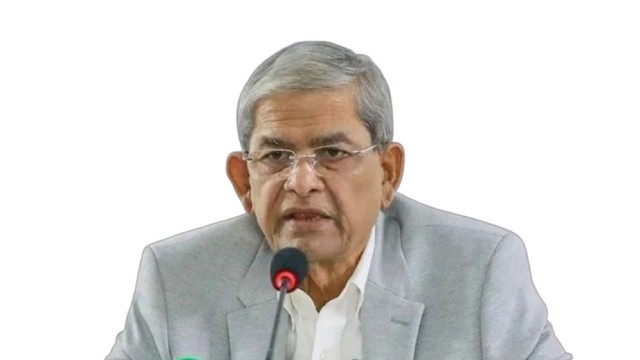
Dhaka, May 15 (V7N) – Mirza Fakhrul Islam Alamgir has described the Farakka Barrage as a “death trap,” alleging that its continued operation has severely harmed Bangladesh’s environment and water security.
In a statement issued on Friday (May 15) ahead of “Historic Farakka Day” on May 16, the BNP Secretary General said India’s Farakka Barrage on the Ganges has led to unilateral withdrawal of water from shared rivers, causing severe ecological and agricultural damage in northwestern Bangladesh.
Allegations Over Water Crisis
Fakhrul claimed that the region has been pushed toward desertification due to reduced river flow, leading to what he described as “serious environmental imbalance” and long-term humanitarian risks.
He also criticized the former government for allowing what he termed “experimental operation” of the barrage without public consent, arguing that its continued use has worsened water scarcity in Bangladesh.
Historical Reference to Farakka Movement
Referring to historical events, Fakhrul said that political and religious leader Maulana Abdul Hamid Khan Bhashani led a mass movement toward Farakka in 1976 to protest water diversion and raise international awareness about the issue.
He added that the Farakka issue remains highly relevant today, citing concerns over the management of 54 transboundary rivers flowing from India into Bangladesh and the broader impact on agriculture, biodiversity, and livelihoods.
Call for Water Rights
Fakhrul said the observance of Farakka Day continues to inspire demands for fair water-sharing agreements and stronger international attention to transboundary river issues affecting Bangladesh.
He concluded that the struggle for equitable water distribution remains essential for the country’s environmental survival and future development.
END/SMA/AJ