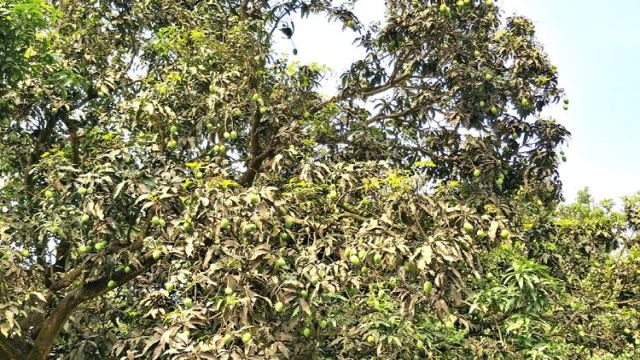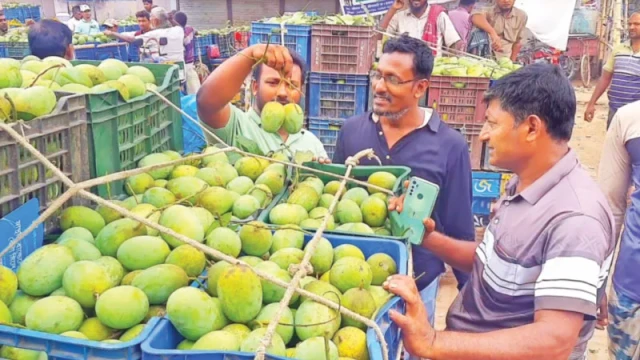
Chapainawabganj, Jun 13 (V7N) — Despite a bumper mango harvest this season, farmers in Chapainawabganj are expressing frustration and anger over low market prices and the continued practice of the controversial “Dholan” system, which they say is depriving them of fair returns.
Farmers had hoped to earn good profits after favorable weather conditions led to abundant production. However, various challenges, including excess supply, increased taxes and market practices, have significantly reduced their earnings.
According to farmers, the “Dholan” system—where traders take an additional 10 to 20 kilograms of mangoes beyond the standard 40-kilogram maund—continues to burden growers despite administrative efforts to abolish it.
Dispute Over Dholan System
The local administration says the Dholan system has been officially abolished following a decision made at a meeting chaired by the Rajshahi Divisional Commissioner. However, traders claim mangoes are still being bought through mutual agreements based on the same system.
Farmers argue that they are effectively being held hostage by the practice.
Kansat Market Under Pressure
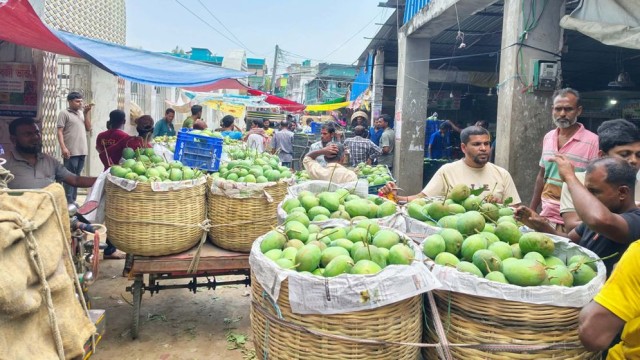
Kansat, known as the largest mango market in Bangladesh and located in Shibganj upazila, remains crowded with mangoes from Chapainawabganj as well as neighboring districts including Dinajpur, Panchagarh, Thakurgaon and Naogaon.
However, increased production costs, taxes and lower prices have placed additional pressure on growers.
Farmers report that prices of several mango varieties have fallen by nearly half compared to last year. They also claim that, in addition to Dholan deductions, market fees have increased by around 25 percent and are sometimes collected multiple times during the selling process.
Current Market Prices
A visit to Kansat market revealed the following price ranges:
-
Gopalbhog: Tk 1,500–2,000 per maund
-
Lakshmanbhog: Tk 650–850 per maund
-
Khirsapat: Tk 1,800–3,400 per maund
-
Amrapali and Langra: Tk 1,500–2,500 per maund
-
Banana Mango: Tk 2,000–3,500 per maund
-
Raniprasad: Tk 1,000–1,400 per maund
Farmers Voice Concerns
Jahangir Alam, a mango farmer from Chakkitti, said this year’s production was excellent, but demand has declined due to extreme heat.
“We have been suffering losses for the last five years because of various problems, including the Dholan practice. We can no longer continue absorbing these losses,” he said.
Traders Call for Uniform Policy
Mango trader Meherul Islam said debates over weight measurements have continued for nearly a decade.
“Several meetings have discussed buying and selling mangoes either per kilogram or at a fixed 40 kilograms per maund. But implementation has failed due to disagreements among both farmers and traders. A nationwide uniform policy would benefit everyone involved,” he said.
Another trader, Raihan Ali, alleged that market leaseholders are collecting increased fees despite obtaining the lease at a lower price this year.
Market Authorities Deny Allegations
Md. Alamgir Jewel, the leaseholder of Kansat Mango Market, denied allegations of excessive fee collection.
He said around 50 personnel, including police officers, Ansar members and volunteers, are working to reduce traffic congestion and assist farmers.
“No additional fees are being charged. If anyone has evidence of multiple fee collections, they should report it to the administration,” he said.
Administration Warns of Action
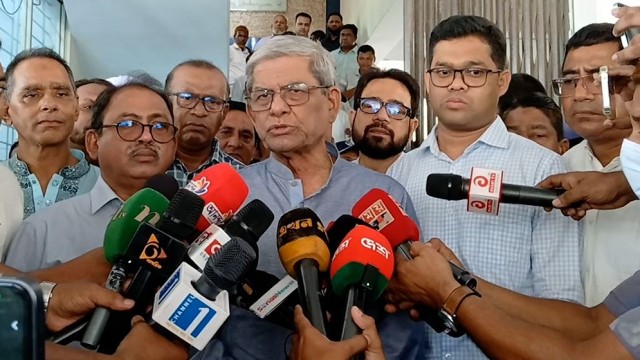
Shibganj Upazila Nirbahi Officer (UNO) Mazharul Islam stated that market fees are being collected according to government-approved rates.
“If there are complaints of collecting fees multiple times, action will be taken against the leaseholder. The Dholan system has already been abolished. If farmers file complaints about excess mango collection, legal action will be taken against those responsible,” he said.
Agricultural Department's View
Officials from the Department of Agricultural Extension attributed the situation to an oversupply of mangoes relative to market demand.
The department believes farmers may still avoid major losses at current price levels but emphasized the need to expand exports and develop value-added mango products.
“If we can increase exports and diversify the use of mangoes through processing and other industries, farmers will be able to receive fair prices in the future,” a department official said.
The situation has reignited debate over market regulation, pricing mechanisms and farmer protection in Bangladesh’s largest mango-producing region, as growers continue to seek fair compensation for their harvest.
END/SMA/AJ