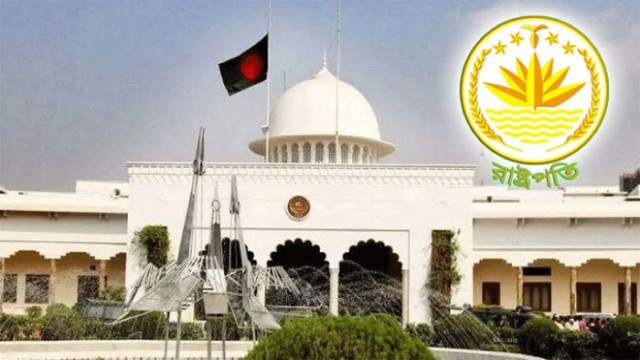
Dhaka, July 24 (V7N) — Discussions over the possible resignation of President Mohammed Shahabuddin have raised a new political question in Bangladesh: who will become the country’s next president?
As the possibility of a change in the nation’s highest constitutional office emerges, discussions have reportedly begun within the government and the Bangladesh Nationalist Party (BNP) leadership over selecting a credible and widely accepted figure for the presidency.
According to multiple reliable sources, President Shahabuddin has taken a decision in principle to step down due to health concerns. The possibility of a change in the presidency just five months after the government assumed office is being considered cautiously by the BNP leadership.
Although the party has not made any official announcement or indication regarding a presidential candidate, several names have reportedly surfaced in political and government circles.
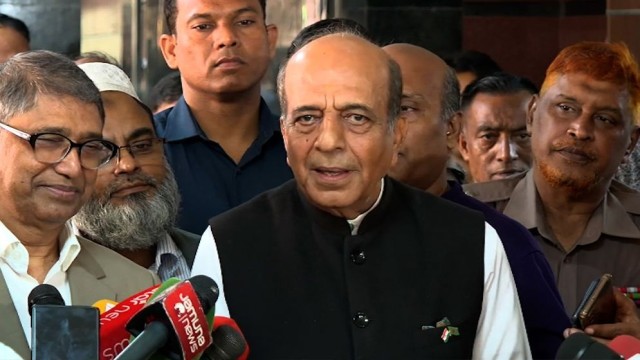
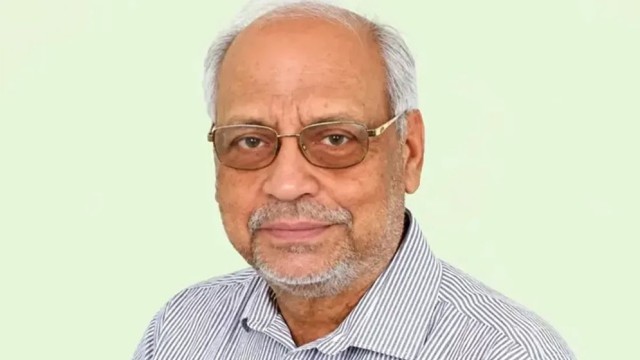
Among the potential candidates being discussed are three senior BNP leaders — BNP Secretary General Mirza Fakhrul Islam Alamgir, Standing Committee member Dr. Khandaker Mosharraf Hossain, and Dr. Abdul Moyeen Khan. The name of Cabinet Secretary Nasimul Ghani, who is currently serving in an important government position on a contractual basis, has also been mentioned in discussions.
Political analysts say that under the existing constitutional system, the selection of the next president will largely depend on the political decision of Prime Minister Tarique Rahman, as the BNP’s majority in parliament would make the party’s choice decisive in the presidential election.
Mirza Fakhrul Islam Alamgir has served as BNP secretary general for more than a decade. During his long political career, he has served as a parliament member and state minister. He is currently serving as the Minister for Local Government, Rural Development and Cooperatives. Party sources say he is considered a trusted leader due to his experience and public acceptance.
However, former Jahangirnagar University Professor of Government and Politics Dilara Chowdhury has expressed support for appointing a politician rather than a bureaucrat as president.
“Politicians make sacrifices for their parties and understand politics. Therefore, the president should come from among politicians. I do not see a strong justification for appointing bureaucrats to such a high position,” she said.
She added that the final decision would depend largely on the preference of BNP Chairman and Prime Minister Tarique Rahman, given the party’s parliamentary majority.
The political analyst also said that even if the president changes, there is unlikely to be any major shift in state governance under the current constitutional structure.
“Under the existing constitution, the president does not hold significant executive authority. The president has to act according to the advice of the prime minister. We had expected a balance between the powers of the president and the prime minister, but so far no such structural reform has been introduced,” she said.
The possible change in the presidency has therefore become a significant political discussion, with attention now focused on who may succeed President Shahabuddin if he steps down.
END/SMA/AJ/