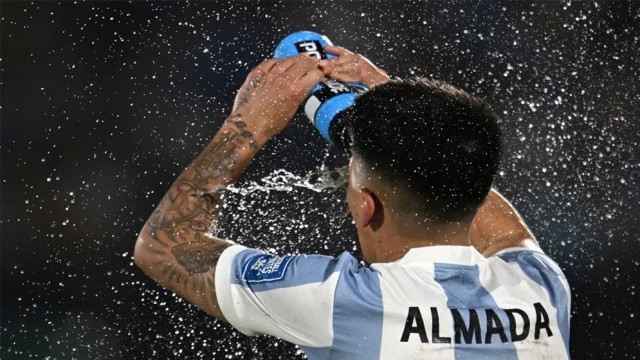
New York, Jun 14 (V7N) – Football is no longer just a 90-minute battle of skill and tactics; it has evolved into a demanding test of elite fitness, sports science, and player welfare. As FIFA prepares for the 2026 World Cup across North America, one of its most debated innovations—the mandatory three-minute hydration break—has sparked both praise and criticism.
Introduced to combat the intense summer heat and humidity expected during the tournament, the cooling break is designed to protect players from heat-related illnesses and physical exhaustion. Sports medicine experts argue that continuous high-intensity running can rapidly increase body temperature, exposing footballers to risks such as dehydration, dizziness, muscle strain, and even heatstroke.
The measure gained further support following several recent incidents in international competitions where players struggled with extreme heat conditions. Medical professionals believe the brief pause allows athletes to rehydrate, recover, and lower their core body temperature, helping them maintain peak performance throughout the match.
Supporters of the rule also highlight its tactical value. Coaches can use the break to communicate directly with players, make on-field adjustments, and address weaknesses before the closing stages of the first half. FIFA officials maintain that the decision reflects the growing physical demands of modern football and prioritizes player safety above all else.
However, critics argue that the mandatory interruption comes at a cost. They believe football’s natural rhythm and momentum can be severely disrupted by a scheduled stoppage, potentially altering the course of a match.
Concerns were evident during the opening fixtures, particularly in the South Korea versus Czech Republic encounter. With the Czech side applying sustained attacking pressure during the first half, the referee halted play for the hydration break in the 22nd minute. Observers noted that the interruption appeared to slow the Czech momentum, allowing South Korea to regroup and regain control.
While debates continue over whether the rule benefits competition or interferes with it, one thing remains clear: FIFA’s hydration break represents a significant shift in the balance between preserving football’s flow and protecting the health of its players. As the 2026 World Cup approaches, the effectiveness of the measure will likely remain one of the tournament’s most closely watched talking points.
END/SMA/AJ