Dhaka, Jun 07 (V7N) – Bangladesh is observing Historic Six-Point Day today, commemorating a landmark movement that transformed the political landscape of then East Pakistan and laid the foundation for the country's struggle for self-determination and eventual independence.
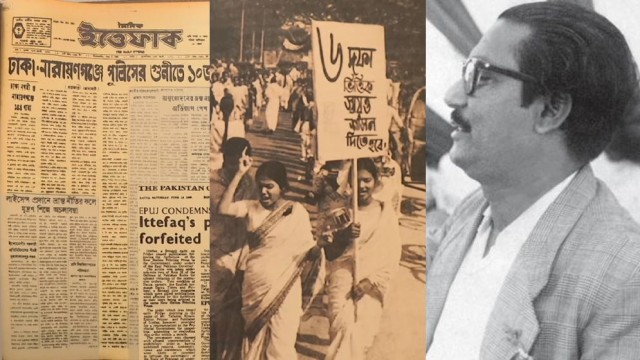
On June 7, 1966, a nationwide mass movement erupted in support of the historic Six-Point Demand, widely regarded as the charter of Bengali emancipation. The movement marked a turning point in the political history of the Bengali nation and intensified the demand for autonomy from the then Pakistani state.
The struggle against political and economic discrimination by the ruling elite of West Pakistan had been carried forward by leaders such as Sher-e-Bangla A.K. Fazlul Huq, Hossain Shaheed Suhrawardy and Maulana Abdul Hamid Khan Bhashani. However, the movement gained unprecedented momentum in the 1960s under the leadership of Bangabandhu Sheikh Mujibur Rahman.
On February 5, 1966, Sheikh Mujibur Rahman formally presented the historic Six-Point Proposal at a conference in Lahore, Pakistan. The proposal sought greater autonomy for East Pakistan and addressed long-standing grievances over political representation, economic inequality and administrative control.
The six-point program called for a federal form of government with parliamentary democracy, with all powers except defense and foreign affairs vested in the provincial governments. It also proposed separate and easily convertible currencies or effective fiscal measures, provincial control over taxation and revenue collection, separate foreign exchange accounts for the two regions, and the establishment of a paramilitary force and naval headquarters in East Pakistan to strengthen regional security.
To realize these demands, the Awami League called a nationwide hartal on June 7, 1966. During the movement, police and members of the then East Pakistan Rifles (EPR) opened fire on demonstrators in Tongi, Dhaka and Narayanganj, killing 11 people, including activists Manu Mia, Shafiq and Shamsul Haque.
The sacrifice of those martyrs further energized the Bengali nationalist movement, paving the way for the Mass Uprising of 1969, the growing demand for self-rule and ultimately the Liberation War of 1971.
Historians regard the Six-Point Movement as one of the most significant milestones in Bangladesh's journey toward independence. Six decades later, the demands continue to be remembered as a defining chapter in the nation's political history and a cornerstone in the formation of the independent state of Bangladesh.
END/SMA/AJ