Rajshahi, Oct 11 (V7N) – Illegal sawmills, commercial crops and dense vegetation have encroached on the road shoulders of the busy Baneshwar-Ishwardi regional highway in Rajshahi, raising concerns over road safety, traffic congestion and highway robberies.
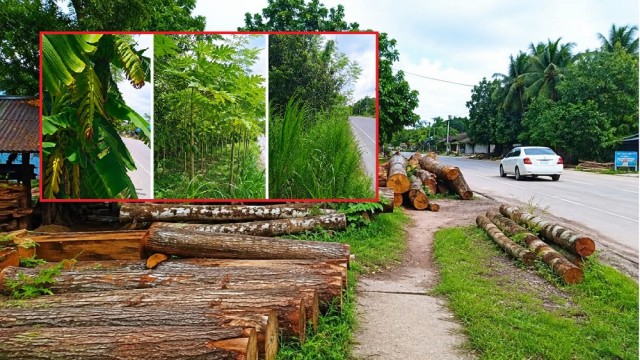
The road shoulders, designed to provide space for emergency stops and help drivers manoeuvre safely, have been occupied by timber logs, sawmill operations and crops such as turmeric, ginger, bananas, papayas and tall Napier grass. Residents say the encroachment has reduced visibility at bends, left vehicles with little room to pull over safely and created hiding places for suspected robbers.
The 54-kilometre highway is an important transport link between Rajshahi and the southern part of the country and also connects the region with the Rooppur Nuclear Power Plant. Its upgrading to a regional highway began in 2020, and construction was completed in early 2024 at an initial cost of around Tk 554 crore, followed by an additional allocation of about Tk 100 crore for land acquisition and other infrastructure.
Despite the investment, residents say sections of the road shoulders have been occupied within two years of the highway opening.
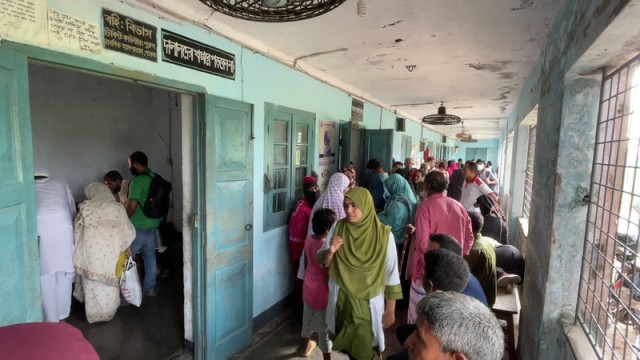
Official figures from the upazila health complexes in Charghat and Bagha show that 4,249 people received treatment for road accident injuries along approximately 38 kilometres of the highway within the two upazilas over the past year. At least 28 people died in road accidents in the two upazilas during the same period.
Local residents say vehicles frequently stop on the main carriageway to load and unload timber and agricultural produce because the shoulders are unavailable, increasing the risk of collisions with oncoming traffic.
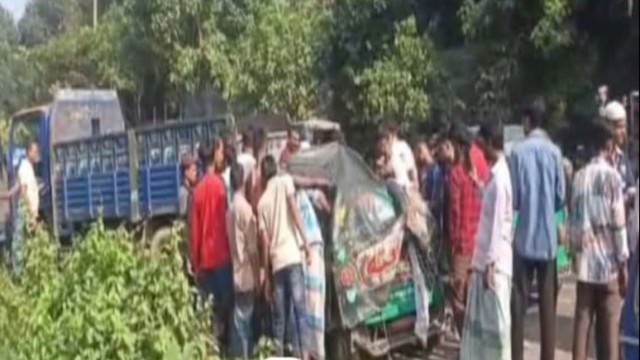
On June 27, a 15-year-old boy, Rafiul Ehsan, was killed when an autorickshaw carrying him home from Bagha struck a timber-laden trolley parked on the road near Nurul Bottola in Raotha at around 8pm, according to local accounts.
In another incident on November 7, three friends—Tuhin Ali, 25, Maruf Ali, 18, and Shimul Ali, 25—were killed when their motorcycle collided head-on with an ambulance while passing a goods truck parked on the road in the Shibpur area.
Truck driver Mokshed Ali and teacher Fazlur Rahman of Mirganj in Bagha said the area produces large quantities of mangoes and other agricultural goods, requiring hundreds of trucks to load and unload cargo.
They said the lack of usable shoulders forces trucks to stop on the main road, disrupting traffic and increasing the risk of accidents on the busy two-lane highway.
Residents have also raised concerns about robberies allegedly taking place near dense roadside vegetation. They claim that suspects hide in tall Napier grass and banana plantations before emerging to stop vehicles and rob passengers and traders.
Manik Islam, a garment trader from Sholua village, said three men emerged from Napier grass near the Charghat Fire Service intersection at around 11:30pm as he was travelling from Pabna to Baneshwar with goods. He alleged that the men stopped him and stole goods worth several lakh taka.
In a separate incident, contractor Abdul Awal was allegedly knocked off his motorcycle near the Taltala area and dragged into roadside grass and a banana plantation, where his belongings were stolen. Local trader Shamim Islam also said he had faced repeated attempts at robbery.
A field investigation found at least 21 sawmills along the highway in the Charghat and Bagha sections. Many allegedly operate without the necessary clearances and use government road shoulders and adjoining road space to store heavy timber logs.
Large trucks often remain parked on the main carriageway for extended periods while timber is loaded and unloaded, further narrowing the usable road space.
However, Tarik Hossain, owner of Twister Furniture and Sawmill, and Zakaria, owner of Zakaria Sawmill, acknowledged that storing timber on the road shoulder was inappropriate. They said they would remove the logs themselves, although they were unaware of notices reportedly issued by the Forest Department.
Jahangir Hossain, president of the Charghat Upazila Teachers' Committee and headteacher of Holidagachhi Girls' High School, said occupying road shoulders on a busy two-lane highway posed a serious safety risk by restricting visibility and leaving drivers with no space to manoeuvre during emergencies.
Charghat Upazila Forest Officer Mahbubur Rahman said authorities had issued notices and conducted eviction drives against sawmill owners, but some had subsequently occupied the shoulders again. He said coordinated action would be taken soon.
Some farmers, including Abdul Hannan of Naodara, said they had planted papayas and Napier grass on the roadside because the land was vacant and livestock did not disturb the crops. They claimed that the administration had not instructed them to stop.
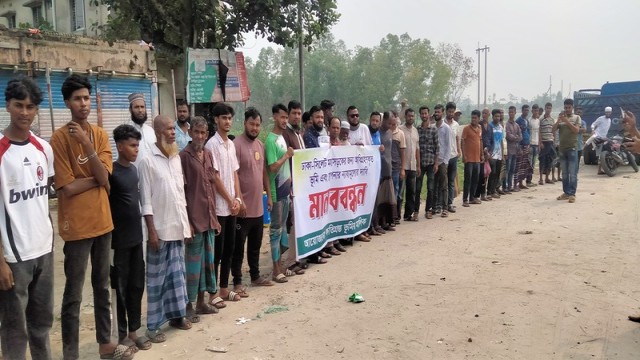
Saiful Islam, president of the Safe Roads Movement's Charghat upazila unit, said allowing cultivation and commercial activities to obstruct a highway built at a cost of hundreds of crores of taka posed a serious threat to public safety.
Charghat Model Police Station Officer-in-Charge Mahbubur Rahman said open roadside areas make police patrols and security monitoring easier, while dense vegetation makes it difficult to identify potential criminals. He said the matter had been brought to the attention of the Roads and Highways Department.
Abdul Mannaf Akand, sub-divisional engineer of the Roads and Highways Department in Rajshahi, said authorities were aware that cultivation and roadside vegetation were contributing to safety concerns along the Baneshwar-Ishwardi highway.
He said a final deadline would be set for those responsible to remove the obstructions voluntarily. If they fail to comply within the stipulated period, the department will conduct an eviction drive under the law to clear the road shoulders.
END/MRA/SMA/