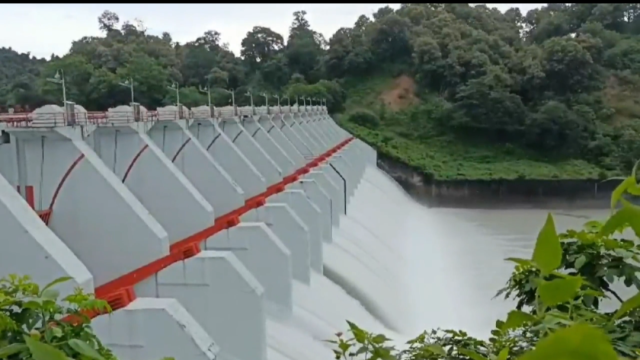
Rangamati, June 12, (V7N): Water levels in Kaptai Lake have fallen alarmingly due to intense heat and months of scant rainfall, officials said, triggering widespread disruption in power generation, navigation, and commodity supply chains.
According to authorities, the lake’s normal water level is 109 MSL (Mean Sea Level), but it has dropped to just 76 MSL. The sharp decline has forced three of the five units at the 242 MW Kaptai Hydroelectric Power Plant to shut down. Only two units remain operational, producing around 60 MW — a shortfall that is putting significant strain on the national grid.
Navigation in Crisis
The water shortage has also battered Rangamati’s river transport network. Boat routes connecting Bagaichhari, Langadu, Barkal, and Juraichhari upazilas with the district headquarters are nearly paralyzed. Falling depth has prevented large launches and passenger vessels from docking at many terminals. Commuters now rely on multiple small boats, increasing both travel time and cost.
Emerging Shoals, Rising Prices
Newly exposed shoals and sandbars have made navigation risky across several parts of the lake. Disruptions in cargo movement are already rippling through local markets. Traders and residents report price hikes for several essentials as transport costs surge.
Siltation Worsening the Crisis
Locals allege that years of silt accumulation have reduced the lake’s water retention capacity. As a result, similar crises hit every dry season, repeatedly threatening power generation, navigation, and the livelihoods of communities dependent on the lake.
Authorities and residents are now waiting for heavy rainfall to ease the crisis. They hope adequate monsoon showers will raise water levels, gradually restoring power production and normalizing river communication.
END/AMR/RH