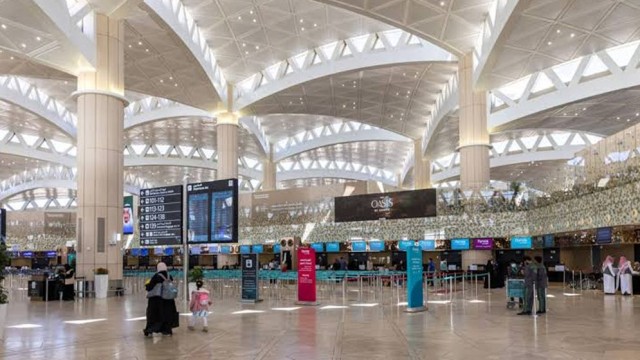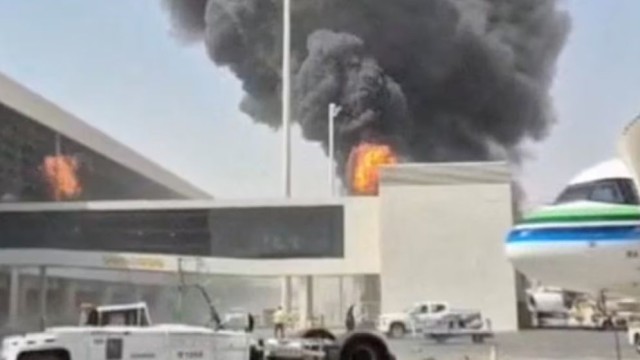
Riyadh, Oct 13 (V7N)- Saudi Arabia’s decision to stop issuing public warnings about potential military attacks in the days before a series of strikes, including an attack on Riyadh airport, has raised questions about the country’s emergency alert system and public safety.
According to Reuters, four attacks last week killed at least 18 people and injured more than 300. A week after the incidents, the Saudi government had yet to explain why no public warning was issued before the attacks.
Previously, the authorities had used early alerts to inform residents about potential threats during the conflict. However, Reuters reported that the warnings were seen as undermining Saudi Arabia’s efforts to maintain an image of stability amid the war involving Iran-backed Houthi rebels in Yemen.
Four Western and Arab officials, along with several regional political analysts, told Reuters that the absence of warnings during the attacks had raised concerns about Saudi Arabia’s security preparedness and the safety of residents and foreign visitors.
They also suggested that suspending alerts despite the threat of attacks may have been intended to preserve a sense of normalcy.
“The Saudi government is trying to achieve two things at the same time. They want to carry out a military operation and also reassure the people of the country and external stakeholders,” said Sultan Alamer, a Saudi academic based in the United States and a senior fellow at the Middle East Policy Council.
Saudi Arabia’s Civil Defense, which operates under the Interior Ministry and is responsible for emergency management, rescue and firefighting, issues advance warnings to the public.
Reuters said it contacted the agency and the government’s media office to ask why no alert was issued before the attacks, but received no response.
Regional analysts warned that the approach could have unintended consequences, as the absence of advance warnings has increased uncertainty and anxiety among residents.
On Monday (October 12), Civil Defense issued another alert warning of a potential threat in Riyadh and several southern cities. According to Reuters, it was the first such warning since September 29.
Reuters could not independently confirm whether the alert system had been reactivated in response to the airport attack. The Saudi government did not immediately respond to a request for comment.
Why Was the Alert System Silent?
Since the US-Iran war began in February, Gulf countries have faced Iranian drone and missile attacks, but their approaches to public warnings have differed.
Qatar’s Interior Ministry has sent mobile-phone alerts ahead of almost every attack. During attacks in July, residents were also advised to remain indoors and stay away from windows.
Bahrain and Kuwait, meanwhile, have repeatedly sounded sirens instructing people to seek shelter.
Saudi Arabia launched a national early-warning system in May, designed to notify people about potential attacks through mobile phones and social media. However, the system reportedly remained largely silent before last week’s attacks despite an increase in Houthi attacks.
Information published on the Saudi Civil Defense account on X showed that the last warning before the latest attacks was issued on September 29, alerting residents in the southern province of Najran.
Civil Defense has continued issuing routine safety warnings about severe weather, including rain and flooding. Such warnings were also issued on Monday.
Authorities have separately urged residents not to spread rumours or unverified information about missile interceptions, attack locations or related images on social media.
The warning issued on Monday was also made under government regulations introduced in March, according to the report.
The lack of clarity surrounding the timing and use of Saudi Arabia’s early-warning system has intensified scrutiny of how authorities balance public safety, security operations and efforts to maintain normal daily life during the conflict.
END/SMA/AJ