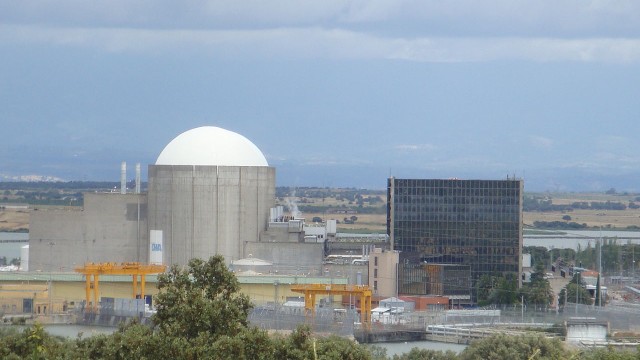
Spain, May 04 (V7N) - In the western Spanish village of Almaraz, uncertainty looms over the future of the country’s largest nuclear power plant, which is scheduled to close in 2028 under the government’s plan to phase out all reactors by 2035. The facility currently provides around seven percent of Spain’s electricity, but last year’s nationwide blackout and recent fuel supply disruptions linked to the Middle East war have reignited debate about whether shutting it down is wise.
Local workers and businesses fear devastating economic consequences. Mechanic Jose Antonio Morgado, who has worked seasonal refuelling operations since 1989, said it was “sad” to see the plant slated for closure. Temporary refuelling jobs can pay up to €6,000 a month, a significant income in Extremadura, one of Spain’s poorest regions. Restaurant owner David Martin warned that without the plant, his business could lose half its customers, forcing layoffs.
Residents have mobilized through a grassroots campaign, Si a Almaraz, Si al Futuro (“Yes to Almaraz, Yes to the Future”), arguing the plant supports about 4,000 jobs and accounts for five percent of Extremadura’s economic output. Plant officials also stress that nuclear energy provides stable electricity compared to fluctuating renewable sources.
The European Commission has urged member states not to prematurely shut nuclear facilities, citing energy independence. But Prime Minister Pedro Sanchez’s government remains committed to its green agenda, aiming to raise renewable energy’s share of electricity to 81 percent by 2030. Greenpeace Spain insists the government must stay the course, warning that extending Almaraz’s operation could undermine renewable investment worth €26 billion.
Spain’s ecological transition ministry has promised retraining programs and support measures, including jobs linked to a planned electric vehicle battery factory nearby. Still, many locals remain unconvinced, fearing that the closure will leave their communities economically hollow.
END/WD/RH