
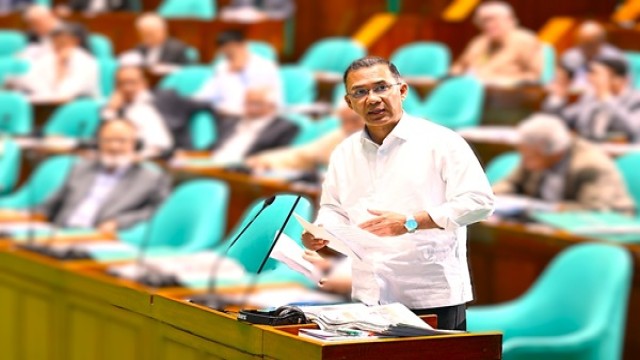
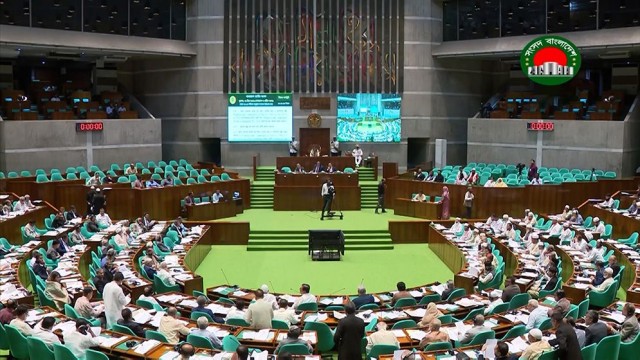
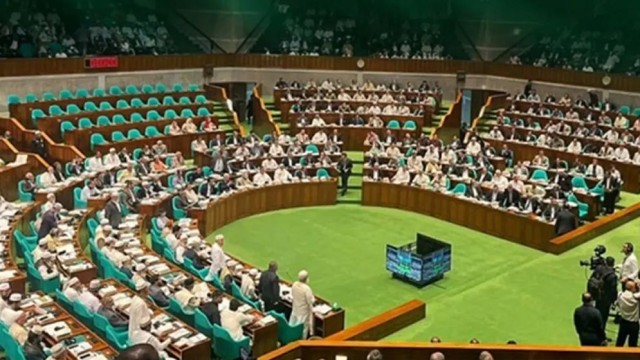
SANGSAD BHABAN, April 29 (V7N) — Prime Minister Tarique Rahman has announced that the government is in the process of implementing the “Guchchhagram (Cluster Village) Phase-3 Project.” This ambitious initiative is designed to provide permanent rehabilitation for landless, homeless, and disaster-affected families across Bangladesh. The Prime Minister shared these plans during a question-and-answer session in the Jatiya Sangsad on Wednesday, emphasizing that the project will specifically target those who have lost their homes to the country's frequent and devastating river erosion.
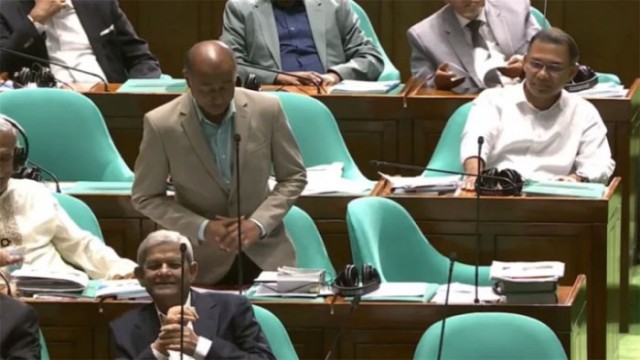
The Prime Minister’s remarks came in response to a query from Md Hafiz Ibrahim, a treasury bench member representing the Bhola-2 constituency. The session was presided over by Speaker Hafiz Uddin Ahmad, Bir Bikram, and served as a platform for the government to reiterate its focus on rural development. By placing the project under the Ministry of Land, the government aims to formalize land ownership for the most vulnerable citizens, ensuring they have a legal and physical foundation for their future.
Tarique Rahman, who also serves as the Chairman of the ruling Bangladesh Nationalist Party (BNP), stated that the government remains firmly committed to ensuring sustainable housing for the destitute. He noted that providing a roof over one’s head is only the first step; the ultimate goal of the Phase-3 project is to improve the socio-economic conditions of underprivileged families. By clustering these homes together, the government intends to make it easier to provide essential services like clean water, sanitation, and primary education.
Reflecting on the history of such initiatives, the Leader of the House reminded the parliament of the BNP’s past contributions to housing. He recalled that after the party formed the government in 2001, a massive housing project was launched under the Prime Minister’s Office (PMO). That historical project was driven by the same objective of rehabilitating distressed and landless families who had fallen through the cracks of the national economy.
Between 2001 and 2006, that previous housing initiative successfully rehabilitated approximately 65,000 families nationwide. The Prime Minister used this historical context to demonstrate the party’s long-standing dedication to the "landless and rootless" population. He argued that the current Guchchhagram Phase-3 Project is a natural evolution of those earlier efforts, updated to meet the environmental and economic challenges of 2026.
Addressing the needs of urban and semi-urban populations, the Prime Minister also discussed housing for low and middle-income groups. He highlighted the role of the National Housing Authority, operating under the Ministry of Housing and Public Works. This authority is tasked with developing well-planned housing expansion projects at both the district and upazila levels, ensuring that affordable housing is not restricted to the capital but is accessible across the entire country.
The Prime Minister emphasized that "well-planned" expansion is a priority to prevent the growth of unplanned slums and congested colonies. By focusing on affordable housing construction, the government hopes to provide viable alternatives for working-class citizens who are often priced out of the private real estate market. These projects are currently being designed to include modern amenities and sustainable infrastructure.
While the current Phase-3 project is being spearheaded by the Ministry of Land, the Prime Minister clarified the status of the Prime Minister’s Office (PMO) regarding housing. He noted that although there is currently no active housing project directly under the PMO, the government remains flexible. He assured the House that additional steps would be taken in the future if feasibility studies and public demand indicate a need for PMO-led intervention.
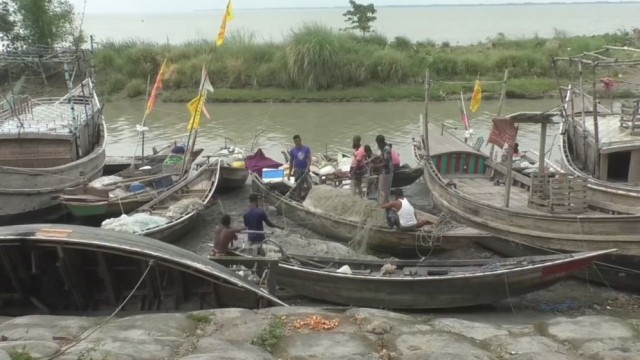
The mention of river erosion was particularly significant, as millions of Bangladeshis are displaced by the shifting banks of the Padma, Meghna, and Jamuna rivers every year. By specifically naming erosion victims as primary beneficiaries of the Guchchhagram project, the Prime Minister addressed a critical gap in the national social safety net. These "climate refugees" often end up in city slums, a trend the government hopes to reverse by providing rural rehabilitation.
Political analysts view this announcement as a strategic move to consolidate support in rural constituencies, where landlessness remains a major political and social issue. By focusing on sustainable housing, the BNP-led government is positioning itself as a champion of the poor. The inclusion of the "Phase-3" branding suggests a continuity of governance and a long-term vision for rural transformation.
The Prime Minister also underscored the inter-ministerial coordination required for such a large-scale project. The collaboration between the Ministry of Land and the Ministry of Housing and Public Works is intended to streamline the identification of suitable Khas (government-owned) land and the subsequent construction of the cluster villages. This synergy is expected to reduce bureaucratic delays that have hindered similar projects in the past.
During the parliamentary discussion, it was noted that the 13th National Parliament is prioritizing "people-centric" legislation. The thanksgiving motion on the President’s speech has seen various ministers and lawmakers emphasize the need for grassroots development. Prime Minister Tarique Rahman’s detailed response regarding the Guchchhagram project aligns with this broader legislative theme of inclusive growth.
The Prime Minister’s speech also touched upon the economic impact of housing. He argued that when a family is given a permanent address, they gain the stability required to seek better employment and invest in their children’s futures. Thus, the housing project is viewed not just as a construction task, but as a multi-generational investment in human capital and poverty alleviation.
The Speaker, Hafiz Uddin Ahmad, acknowledged the importance of the Prime Minister's statement, noting that the issue of homelessness is a matter of national dignity. Lawmakers from both the treasury and opposition benches listened intently as the roadmap for the Phase-3 project was outlined, signaling the high stakes involved in national land reform and rehabilitation.
As the 2026-2027 fiscal year approaches, the budget for these projects is expected to be a focal point of parliamentary debate. With the Guchchhagram Phase-3 Project now officially on the horizon, the government will need to ensure adequate funding to meet its goals. The Prime Minister concluded by reaffirming that no citizen of Bangladesh should remain "address-less" in a modern, developing nation.
END/AJ/RH









Comment: