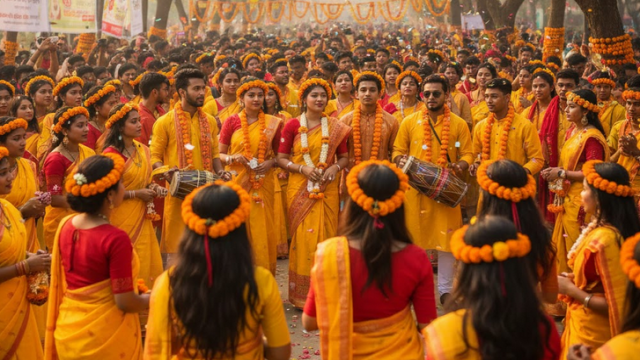
DHAKA, Feb 14, 2026 (V7N) - Pahela Falgun, the first day of spring in the Bangla calendar, was celebrated across Bangladesh today with vibrant festivities, cultural programs and joyful gatherings. Known as the “king of seasons,” spring arrived with its message of renewal, beauty and hope, coinciding once again with Valentine’s Day after the Bangla Academy’s 2020 calendar revision.
Across Dhaka and other cities, people dressed in bright shades of yellow, orange and red — colours symbolising warmth and vitality. The Dhaka University Faculty of Fine Arts hosted the traditional Bawshonto Utsab at Bakultala, where music, poetry, dance and recitations welcomed the season. The Bangladesh Shilpakala Academy and numerous cultural organisations arranged programs featuring Rabindra Sangeet, folk songs and theatre, while streets and parks filled with couples, families and youth celebrating both Falgun and Valentine’s Day.
The tradition of Pahela Falgun dates back to 1401 in the Bangla calendar, with formal celebrations beginning in 1991 at Dhaka University. Since then, it has grown into a nationwide cultural festival. The day is not only about nature’s renewal — fresh leaves, blooming shimul and krishnachura flowers, and the fragrance of spring — but also about remembrance. The red blossoms recall the sacrifices of the language martyrs of February 1952, linking Falgun’s beauty with Bangladesh’s struggle for identity and independence.
In towns and villages, fairs and cultural programs were organised, with young people exchanging flowers and gifts, blending traditional spring festivities with modern Valentine’s customs. Social media platforms were flooded with images of colourful attire, decorated stages and joyous gatherings, reflecting the dual spirit of love and cultural pride.
Pahela Falgun thus stands as more than a seasonal festival. It is a celebration of Bangladesh’s heritage, resilience and unity — a day when nature, culture and affection converge to create one of the most colourful and meaningful occasions of the year.
END/RH