Dhaka, Oct 17 (V7N)- Restoring discipline to Dhaka's chaotic public transport system remains a major challenge, despite repeated initiatives by successive governments. The current government has introduced a new plan to reorganise bus services under a franchise system, raising hopes that it could reduce reckless competition, ease traffic congestion and improve passenger safety.
Under the proposed system, buses operated by 32 companies will run on 32 designated routes. The plan includes fixed bus stops, a specified number of vehicles on each route, electronic ticketing and GPS tracking. Drivers and assistants are also expected to receive monthly salaries instead of relying on daily trips to earn money.
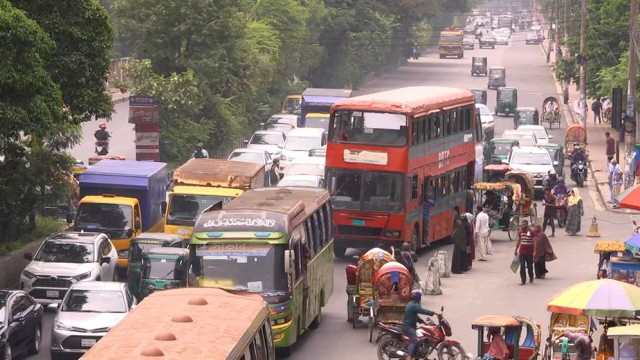
Traffic congestion remains one of the biggest problems in the capital, with the unplanned public transport system and disorderly bus operations contributing significantly to the situation.
Previous efforts to bring discipline to bus services through route rationalisation have largely failed. After years of discussions, the process began in 2021, followed by the launch of the Dhaka Nagar Paribahan service. However, a lack of coordination and the continued operation of competing private bus services undermined the initiative.
Although specific routes were designated, authorities failed to prevent other operators from competing on the same roads. The service gradually lost momentum amid operational difficulties and disputes over profitability.
Bus drivers have complained that traffic congestion and time constraints make it difficult to provide adequate service and generate sufficient income. Meanwhile, passengers continue to face reckless overtaking, buses competing for passengers and frequent traffic disruptions.
The intense competition between buses has also raised concerns about road safety, with passengers warning that reckless driving and sudden manoeuvres increase the risk of serious accidents. Poorly maintained seats, cramped interiors and unhygienic conditions further add to commuters' daily hardships.
Drivers and assistants, however, say the existing contract-based system puts them under financial pressure. According to them, bus owners typically demand Tk 3,000 to Tk 3,500 per day, while workers must also account for fuel expenses, payments to route coordinators and traffic-related fines. Prolonged traffic jams can leave them with little or no earnings after covering their costs.
Under the new franchise model, a designated company will operate each route, with services managed through a coordinated system. Authorities expect fixed stops and GPS monitoring to prevent buses from stopping indiscriminately and competing aggressively for passengers.
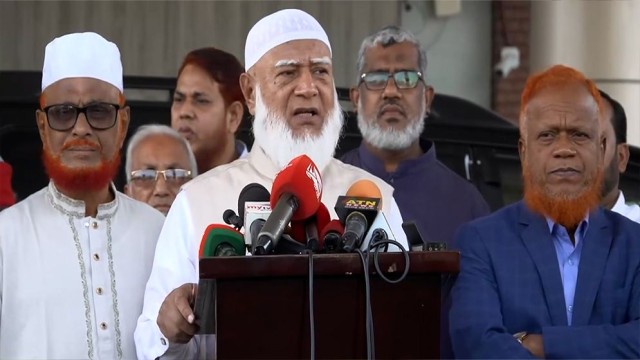
Dhaka Transport Coordination Authority (DTCA) Executive Director Mashiur Rahman said the buses would be required to pick up and drop off passengers at designated stops. He said authorities had analysed passenger numbers per trip to ensure that operators could run services without incurring losses.
Six routes have already been finalised under the “One Route, One Company” initiative. Authorities are also considering the introduction of five circular routes.
Bus owners have agreed to begin a trial service on any two of the six finalised routes from October 18, according to the plan.
Saiful Alam, general secretary of the Dhaka Road Transport Owners Association, said transport businesses inevitably involve the risk of profit and loss, which should be borne by the owners rather than drivers and assistants.
He said services could continue under a contract-based arrangement, adding that companies must also take responsibility for operations. Each vehicle owner would be required to sign a memorandum of understanding with the respective company.
Public transport expert Professor Md. Hadiuzzaman said the initiative's sustainability would depend largely on whether existing transport entrepreneurs were willing and able to invest in the new system.
He said direct government investment and operation of buses would be challenging within the current transport-sector structure. To encourage private investment, owners would need incentives and assurances that the new arrangement could generate sustainable returns.
Previous attempts to reform Dhaka's public transport system have struggled to deliver lasting results. The latest franchise initiative has nevertheless raised expectations of more orderly bus services. Its success will depend on effective coordination, enforcement, investment and the ability to protect both passenger interests and the financial viability of operators.
END/SMA/AJ