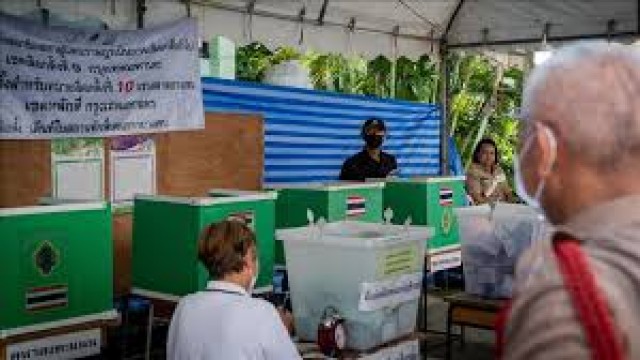
Bangkok, Feb 8 (V7N) — Voting has begun across Thailand for the general election, which is being held earlier than scheduled, alongside a national referendum on amending the 2017 constitution. International media reported that polling stations opened at 8:00 a.m. local time and will remain open until 5:00 p.m.
Early voting, which began on February 1, has already seen over 2.2 million registered voters cast their ballots. Thailand has a total of approximately 53 million registered voters. This election comes amid slow economic growth and a surge in nationalist sentiment.
Over 50 parties are contesting, but only three major parties are realistically positioned to form a government: the reformist People’s Party, the pro-monarchy Bhumjaithai Party, and the Pheu Thai Party. With 500 parliamentary seats up for grabs, surveys indicate no party is likely to achieve a clear majority, making post-election coalition negotiations almost certain. The next Prime Minister will be elected by a majority vote in the lower house of parliament.
The People’s Party, led by Nathapong Ruangpanichayawut, is seen as the front-runner for the most seats. Its reform agenda—including reducing military and judicial influence and major economic policy changes—faces resistance from rival parties, which may unite to prevent the party from taking power. This party is the successor to the Move Forward Party, which won the most seats in 2023 but was blocked from forming a government due to the military-appointed Senate and later disbanded by the Constitutional Court.
The Bhumjaithai Party, led by caretaker Prime Minister Anutin Charnvirakul, is supported by pro-monarchy and military-aligned forces. Anutin assumed office last September after his predecessor faced a no-confidence threat over a diplomatic controversy with Cambodia. His campaign emphasized economic incentives and national security, leveraging nationalist sentiment after deadly border clashes with Cambodia.
The Pheu Thai Party represents the political legacy of imprisoned former Prime Minister Thaksin Shinawatra and the pro-populist Thai Rak Thai movement. Pheu Thai campaigned on economic revival and cash handouts, nominating Thaksin’s nephew, Yodchanan Wongsa-wat, for Prime Minister.
The concurrent referendum asks voters whether to amend the 2017 constitution drafted under military rule. Pro-democracy groups see constitutional reform as critical to reducing unelected institutions’ influence, while conservatives warn of potential political instability.
The election’s outcome will determine not only the new government but also the balance of power between Thailand’s military, judiciary, and elected officials, shaping the country’s democratic trajectory for the coming years.
END/WD/SMA/