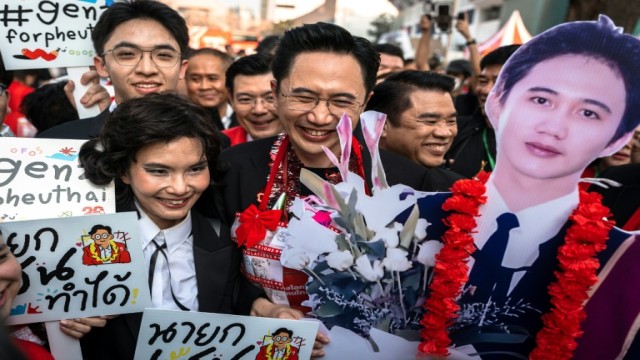
Bangkok, Feb 8 (V7N) — Thai voters went to the polls on Sunday in a closely contested national election expected to shape the country’s political course amid prolonged instability, economic challenges and complex power dynamics beyond the electoral arena.
The election pits reform-oriented forces against conservative groups, with no party forecast to secure an outright majority. Political analysts widely expect coalition negotiations to determine the next government.
The vote comes at a time when Thailand faces multiple challenges, including sluggish economic growth, a tourism sector still recovering from the pandemic, regional security concerns following last year’s border clashes with Cambodia, and the growing threat of transnational cybercrime networks.
Observers note that Thailand’s elections often unfold within a broader institutional framework where unelected bodies play a significant role. “Electoral outcomes are important, but they operate within a system shaped by courts, the constitution and other power centres,” said political analyst Thitinan Pongsudhirak.
The reformist People’s Party, successor to the dissolved Move Forward Party, is leading opinion polls. Its predecessor won the most seats in the previous election but was unable to form a government due to parliamentary hurdles and was later banned by court order. Supporters say the movement continues to draw strength from public backing despite past setbacks.
Pheu Thai, one of Thailand’s most influential political parties, finished second in the last election and later joined a coalition government. However, the party has since faced leadership changes following judicial rulings. Bhumjaithai leader Anutin Charnvirakul assumed office as prime minister in September, becoming Thailand’s third premier in two years.
Thailand’s modern political history has been marked by military coups, judicial interventions and constitutional changes. The current constitution, introduced after the 2014 coup, grants substantial authority to unelected institutions, which analysts say continues to influence governance.
During the campaign, parties focused largely on economic recovery and social welfare. Bhumjaithai highlighted national security and stability, the People’s Party proposed reforms in governance and defence, while Pheu Thai pledged stimulus measures aimed at boosting household incomes and economic activity.
Alongside the election, voters are also participating in a referendum seeking public opinion on constitutional reform in principle, though without outlining specific amendments.
As voting concludes, attention is turning to the post-election process, with analysts saying the final outcome will depend not only on the ballot but also on negotiations within Thailand’s complex political system.
END/WD/RH