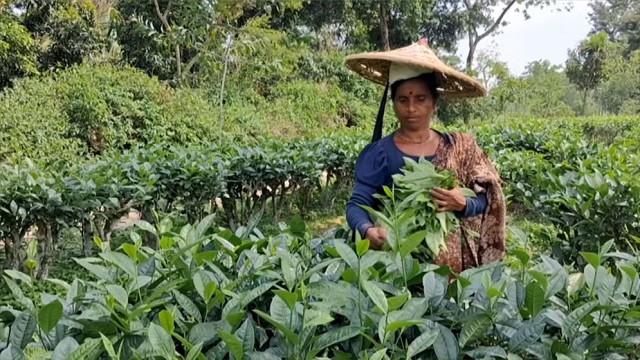
Dhaka, May 03 (V7N) — Despite steady growth in tea production in Bangladesh, the living conditions of tea garden workers remain largely unchanged, with many families continuing to struggle in poverty due to low wages and limited access to basic rights.
Workers in tea gardens earn a maximum daily wage of 187 taka, which they say is insufficient to meet basic needs. Many workers complain that essential rights such as healthcare, education, and proper medical treatment are not adequately ensured, largely due to weak implementation of labor laws and agreements.
The tea workforce, often tied to the industry for generations, continues to face economic hardship. Workers say long hours of labor under harsh weather conditions bring little financial relief. A female worker said, “The wages I earn barely cover family expenses. We cannot afford medical treatment or even basic food like vegetables and fish.”
Another worker added, “We work under the burning sun and get drenched in the rain. It is extremely difficult for us.” Rising market prices have made survival even harder. A male worker said, “If we struggle to survive on around 200 taka, how will our children study or improve their future?”
Housing conditions in tea gardens are also poor, with many workers living in dilapidated homes. During the rainy season, some are forced to take shelter under trees due to lack of proper housing. Many workers are also suffering from various diseases due to inadequate healthcare services.
Workers are demanding not only fair wages but also enforcement of labor rights, land ownership, improved healthcare, access to safe drinking water, education opportunities, and the establishment of a welfare fund.
Bijoy Hazra, Organizing Secretary of the Bangladesh Tea Workers Union, said workers have long been deprived of fundamental rights, including land ownership, despite living in the gardens for over 150 to 200 years.
However, tea garden authorities argue that the sector is facing financial challenges due to stagnant tea prices, making it difficult for owners to increase wages or provide additional benefits.
Gulam Mohammad Shibli, President of the Bangladesh Tea Parliament, acknowledged the hard work of laborers, noting that they endure extreme weather conditions daily.
Meanwhile, officials from the Department of Labor say efforts are underway to improve conditions. Mohammad Ismail, Deputy Director of the Divisional Labor Department, said initiatives are being taken to ensure housing, supply of essential goods, and better living standards for workers. He added that regular inspections are conducted to monitor compliance with labor laws.
According to the Bangladesh Tea Workers Union, around 800,000 people depend on the tea industry for their livelihood, with nearly two-thirds residing in tea gardens in Moulvibazar.
The situation highlights a growing concern over inequality in the sector, where increased production has yet to translate into improved living standards for the workers who sustain it.
END/SMA/AJ