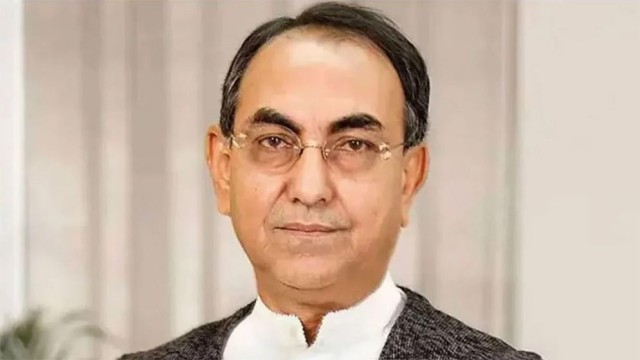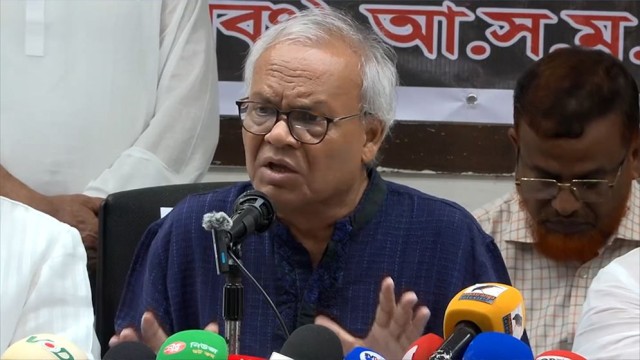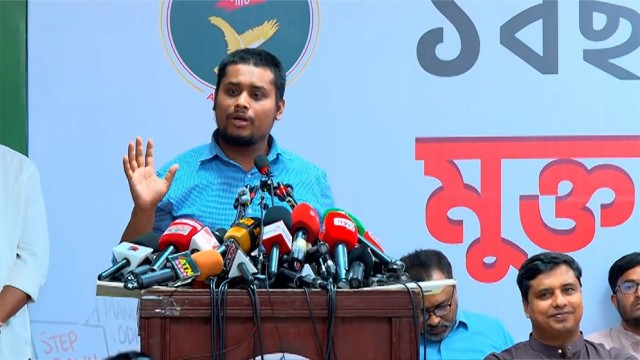
Dhaka, Oct 18 (V7N)- Hasnat Abdullah, chief organiser of the Jatiya Nagorik Party (NCP) in the southern region, has accused the Bangladesh Nationalist Party (BNP) of failing to honour its commitments to implement the July Charter, alleging that the party has selectively accepted its provisions while rejecting others.
He made the remarks at an open discussion organised by Amar Bangladesh (AB) Party at the Dhaka Reporters Unity (DRU) on Sunday, marking the first anniversary of the July Charter.
Hasnat questioned the BNP’s position on implementing the charter, saying the party had repeatedly pledged to follow it “to the letter.” Referring to proposal No. 69, he claimed no political party had submitted a note of dissent on the issue and challenged the BNP to explain its objections to implementation.
He also levelled allegations against Home Minister Salahuddin Ahmed, claiming that the minister’s nephew was involved in a business involving bribes for police postings. Hasnat further criticised the government’s response to political and administrative crises, alleging that some leaders were absent during difficult periods but later returned to prominent positions.
Discussing access to government information, Hasnat referred to proposal No. 62 of the July Charter and the Right to Information (RTI) framework. He alleged that an order issued by the interim government on February 9, 2026, to facilitate public access to government information had been repealed after the BNP took office.
He argued that access to official information was essential to preventing corruption and irregularities in public procurement and ensuring accountability through audits.
Questioning the BNP’s record, Hasnat alleged that the party had failed to implement key provisions of the July Charter despite repeatedly promising to do so. He also made allegations concerning family-linked business interests and appointments, without providing supporting evidence during the remarks cited in the report.
Hasnat further accused the BNP of selectively accepting the results of the February 12 election while rejecting the referendum results. He also criticised the party for not taking the oath of the Constitutional Reform Council, arguing that these decisions had undermined the July Charter’s effectiveness.
He claimed the party had deceived the public 17 times over seven months by failing to fulfil its commitments. These allegations could not be independently verified from the information available.
The NCP leader also criticised what he described as a contradiction between politicians’ public promises to improve public services and their personal choices. He questioned why some political leaders who oversee health-sector reforms reportedly seek medical treatment abroad and why their children study overseas while they advocate improvements to domestic education.
Hasnat concluded by accusing sections of the political establishment of treating Bangladesh primarily as a business opportunity rather than prioritising public service.
The allegations made at the discussion could not be independently verified. No response from the BNP or the individuals named in the allegations was included in the information provided.
END/SMA/AJ