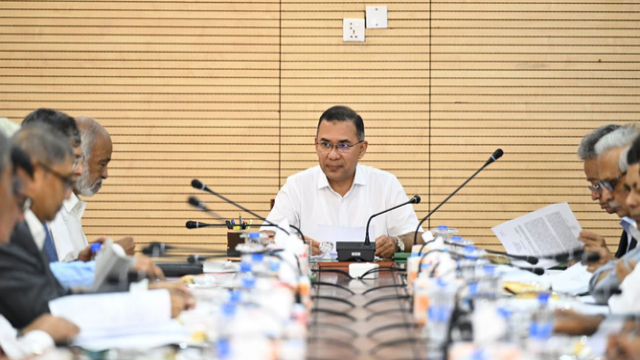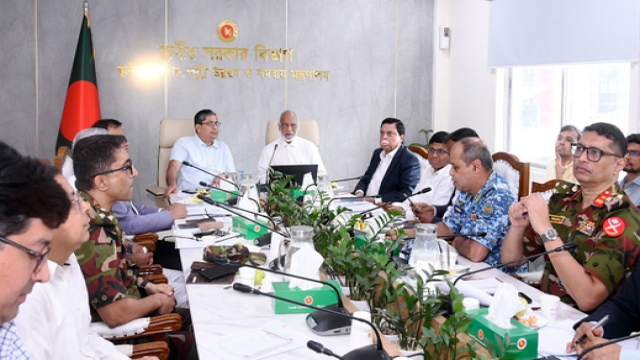
Dhaka, Aug 31 (V7N) – Bangladesh's Purchasing Managers' Index (PMI) rose to 57.8 in July, indicating a broad-based expansion of economic activity driven mainly by a strong rebound in manufacturing, according to findings unveiled at a seminar organized by the Metropolitan Chamber of Commerce and Industry (MCCI) in association with Policy Exchange Bangladesh (PEB).
Manufacturing recorded the highest PMI reading of 65.4 in July, followed by services at 56.0 and agriculture at 55.2. Construction stood at 49.3, remaining marginally below the 50-point mark that separates expansion from contraction.
According to the presentation, the improvement in economic activity coincided with the strongest monthly export earnings in nearly a year. Speakers at the seminar said the broad-based improvement reflected stronger business confidence, a better external outlook and expectations of a more supportive business environment following the national budget.
### Understanding PMI
The PMI is a monthly survey-based economic indicator that tracks business conditions through responses from senior private-sector executives across agriculture, manufacturing, construction and services. A reading above 50 indicates expansion, below 50 indicates contraction, while a reading of 50 means no change from the previous month.
PMI data are released ahead of official GDP figures and have historically shown a strong correlation with actual GDP growth in major economies. Research by the European Central Bank and the US Federal Reserve Banks of Dallas and St. Louis has highlighted the usefulness of PMI as a timely economic indicator.
### Bangladesh PMI Program
The Bangladesh PMI programme was conceptualised in 2022 amid the COVID-19 recovery, with formal initiation in November 2023 with support from the UK's Foreign, Commonwealth and Development Office (FCDO), in association with the Singapore Institute of Purchasing and Materials Management (SIPMM). The first survey was conducted in December 2023, followed by three additional rounds through March 2024 to finalise the methodology and build the survey panel.
The current PMI panel comprises 400 companies, including 212 from services, 92 from manufacturing, 50 from construction and 46 from agriculture, covering major economic sub-sectors including wholesale and retail trade, real estate, transportation, manufacturing, crops and horticulture.
### PMI's Response to Economic Shocks
The presentation also highlighted the PMI's response to major economic shocks. The index fell 27 points between June and July 2024 amid the July Uprising, when a nationwide curfew and a 10-day internet blackout disrupted economic activities. It declined by 8.8 points between March and April 2025 due to long public holidays, early US tariffs on apparel and energy-supply constraints, while a 7.8-point fall between October and November 2025 was linked to weak global demand and investment caution ahead of national elections. The PMI subsequently dropped 9.9 points between May and June 2026 as manufacturing and construction entered contraction amid long Eid holidays, the onset of the monsoon, fading pre-Eid demand and the introduction of a new 15 percent VAT.
Speakers also stressed the need to strengthen Bangladesh's economic data infrastructure, noting that major surveys such as the Household Income and Expenditure Survey and Labour Force Survey are conducted only once every five and three years respectively. They said frequent and rapid surveys such as PMI can provide timely economic insights, reduce information gaps and strengthen evidence-based policymaking and private-sector decision-making.
Representatives from major companies, including BRAC Bank, Standard Chartered Bank, Robi Axiata, PRAN-RFL Group, Square Pharmaceuticals, Berger Paints and ACI, among others, attended the seminar.
end/aj/rh