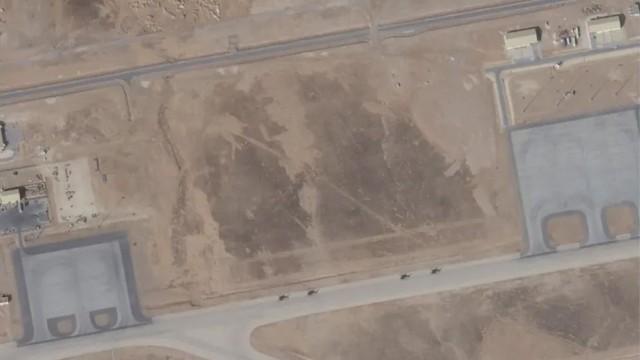
Tehran, Aug 31 (V7N) – The United States and Iran exchanged military strikes on Sunday, the first direct confrontation in over a month, raising fears of a return to major hostilities. The United States struck two Iranian rocket launchers on Larak Island in the Strait of Hormuz . Washington said the launchers posed an "imminent threat" to the waterway . The Islamic Revolutionary Guard Corps (IRGC) confirmed two people were killed in the attack and vowed retaliation .
Iran followed through on its threat by launching ballistic missiles at US air bases in Jordan, which the country's military said caused "heavy damage" . Iran also claimed to have targeted US personnel at an air base in the United Arab Emirates and shot down an American drone over the strait . Jordanian forces said they intercepted eight missiles . These strikes mark the first significant flare-up since the July 29 US strikes on Iran, ending a month of relative calm .
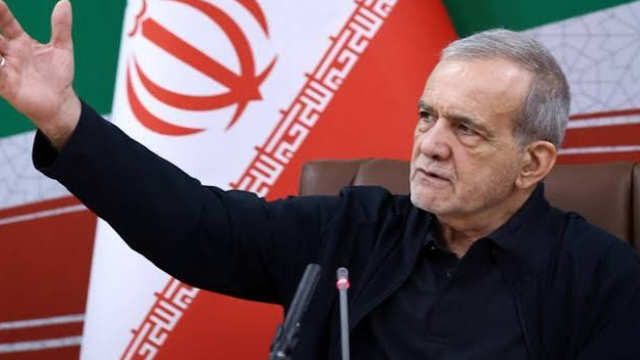
In an apparent shift from the immediate threat of retaliation, Iranian President Masoud Pezeshkian later called for dialogue, stating that "continuing the war is neither in our interest, nor in the interest of the region," and that "the solution to the existing problems is dialogue and cooperation" .
The central issue remains the Strait of Hormuz, a vital chokepoint for global oil and gas shipments . Since the war began on February 28, Iran has largely closed the strait to commercial shipping . In response, the US is pushing for its reopening . Washington claims to have cleared the strait of mines and says it is open, while Iran maintains it remains closed and insists the US must meet its commitments under a June memorandum of understanding .
The conflict began with a surprise wave of US and Israeli strikes on Iran on February 28 . An April ceasefire and a June Memorandum of Understanding, which was meant to provide a roadmap for a permanent settlement through a 60-day window for negotiations, have both collapsed .
Iran's Foreign Minister Abbas Araghchi, while accusing Israeli Prime Minister Benjamin Netanyahu of tricking Washington into the war, has suggested that reopening the Strait of Hormuz could be part of the way forward. Iran and Oman have discussed a "phased framework" for a temporary navigational corridor through the strait . Reports also indicate that Pakistan and Qatar continue to mediate indirect contacts between Tehran and Washington .
end/wd/rh/