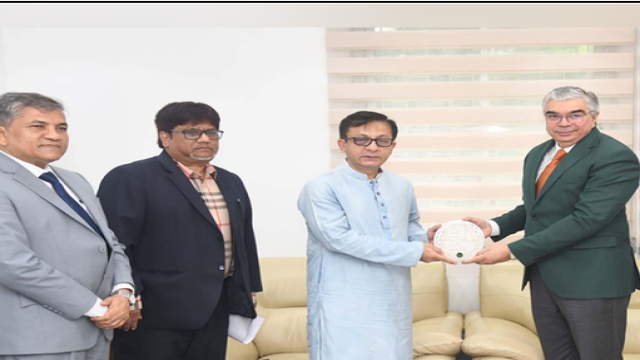
29 June (V7N) - Pakistan has expressed a strong desire to boost its bilateral trade ties with Bangladesh by ramping up agricultural exports and deepening partnerships within the jute industry. This strategic interest was formally conveyed by Asim Azim Siddiqui, Chairman of the Trading Corporation of Pakistan (TCP). Siddiqui presented the trade expansion proposals during a high-level meeting with Bangladesh's Commerce, Industries, and Textiles & Jute Minister, Khandakar Abdul Muktadir, at the Ministry of Industries in Dhaka.
During the discussions, the TCP Chairman detailed specific commodities Pakistan is eager to supply to the Bangladeshi market, including rice, lentils, chickpeas, fertilizer, and edible oil. In return, Pakistan is looking to significantly scale up its imports of premium Bangladeshi jute and raw jute products. This move is intended to adequately satisfy the steadily rising industrial demand for jute goods back in Pakistan.
Welcoming the foreign trade initiative, Minister Khandakar Abdul Muktadir stated that reinforcing commercial relations would effectively drive sustainable economic progress for both South Asian nations. He pointed out that fostering tight-knit cooperation between public institutions and private enterprises could unlock fresh opportunities for cross-border investments, trade, and joint industrial ventures. He added that the current government is actively implementing structural reforms to ease trading processes, accelerate industrialization, and build a highly business-friendly national environment.
The bilateral dialogue covered a wide array of vital goods, specifically focusing on expanding mutual exchange in agricultural products, edible oil, lentils, chickpeas, sugar, urea, fertilizer, and jute. A major breakthrough achieved during the talks was the announcement that a comprehensive Memorandum of Understanding (MoU) between the Trading Corporation of Bangladesh (TCB) and the TCP has reached its final drafting stage. The official signing of this state agreement is heavily anticipated to take place during the first week of July.
Once signed, the upcoming bilateral treaty will establish a reliable framework to directly facilitate government-to-government food trade between the two nations. Additionally, the visiting Pakistani delegation introduced a specialized procurement mechanism. This setup would allow Bangladesh to source essential commodities from international markets at highly competitive rates through Pakistan whenever direct bilateral exports face hurdles, keeping fully in line with Bangladesh’s legal frameworks.
To maintain this positive momentum, both leadership teams officially agreed to reactivate the long-dormant Bangladesh-Pakistan Joint Working Group. They also committed to routinely exchanging private business delegations and locking in stronger technical cooperation across the agricultural and industrial sectors. The high-level meeting concluded in the presence of Pakistan High Commissioner to Bangladesh Imran Haider, alongside Bangladesh's Industries Secretary Abdun Naser Khan and Commerce Secretary Md. Ataur Rahman Khan.
END/AJ/RH/