Teknaf, Aug 18 (V7N) — A pharmacy in Teknaf, near the Rohingya refugee camps, has allegedly been operating an unauthorised treatment facility with several beds at the back of the shop, raising concerns over patient safety and unregulated medical practice.
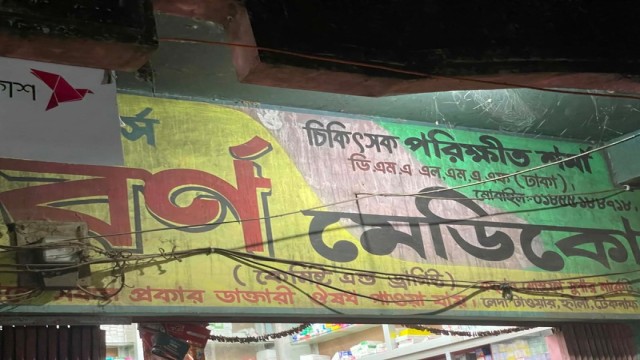
The pharmacy, identified as M/S Born Medico, is located at Rahman Mostafa Super Market in the Leda Tower area of Hnila Union. Although it is reportedly licensed as a retail drug shop, local residents and patients allege that medical services are being provided there around the clock, including outpatient-style consultations, injections and intravenous fluids.
According to locals, a person identified as Parikshit Sharma has been providing treatment for various illnesses at the pharmacy for a long period. Residents allege that he has been treating patients despite not having the required academic qualifications to practise medicine.
The allegations could not be independently verified. However, during a visit to the pharmacy following complaints from local residents and Rohingya refugees, a reporter found several beds placed behind the pharmacy. People were also seen purchasing medicines from the front section of the shop.
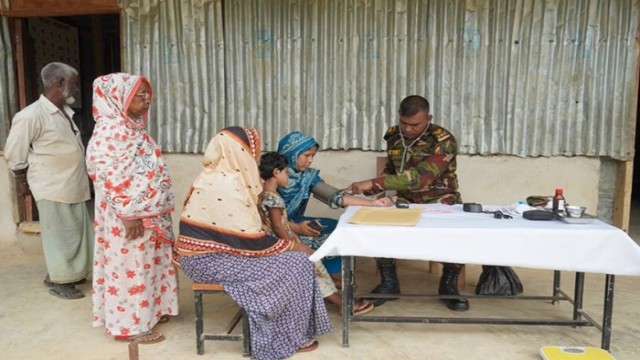
A Rohingya employee named Kaiyum was reportedly administering an injection to a child during the visit. The child's mother told the reporter that Kaiyum and other employees regularly administer injections and intravenous fluids to patients.
The person identified as Parikshit Sharma was reportedly present at the pharmacy but left the premises after noticing the presence of journalists. Four Rohingya men identified as Osman, Hamid, Kaiyum and Baitullah were subsequently seen interacting with patients. They also left after reportedly realising that journalists were present.
Local residents alleged that patients are brought to the facility after claims are made that qualified doctors provide treatment there. They further alleged that no qualified physician regularly practises at the facility.
Sharma, however, acknowledged that the facility did not have permission to operate in the manner alleged. He reportedly said they were providing only basic treatment despite lacking such approval. He also claimed that officials from the Directorate General of Drug Administration had previously inspected the pharmacy and seen the beds.
Local residents have also alleged that medicines are sold at excessive prices and that customers are not always provided with cash memos. These allegations require verification by the relevant authorities.
The report also raises concerns over medicines allegedly stored behind the pharmacy. Under Bangladesh's drug-control regulations, the storage, sale and distribution of medicines must comply with licensing and safety requirements.
A local journalist, Jasim Uddin Tipu, alleged that Sharma had been misleading patients for years by providing treatment without the necessary qualifications. He also alleged that patients were charged for laboratory tests and that reports were prepared without proper testing. These allegations could not be independently verified.
Local civil society representatives have called for urgent action to prevent patients, particularly vulnerable Rohingya refugees and local residents, from being exposed to unsafe or unauthorised medical practices.
Authorities promise investigation
Teknaf Upazila Health and Family Planning Officer (acting) Dr Muhammad Enamul Haque said there was no scope for anyone to deceive people in the name of medical treatment. He said the allegations would be investigated and necessary action would be taken if violations were found.
Cox's Bazar Civil Surgeon Dr Muhammad Saber said pharmacies are not authorised to operate as inpatient treatment facilities.
“There is no provision for treating admitted patients, administering intravenous fluids or placing beds inside or behind a pharmacy,” he said, adding that such practices could pose serious safety risks.
He said action would be taken based on specific information and evidence.
Attempts were made to obtain comments from Kazi Farhad, a drug supervisor at the Directorate General of Drug Administration's Cox's Bazar office, regarding the beds and treatment facilities at the pharmacy. Several phone calls and a message sent through WhatsApp received no response.
The allegations have highlighted broader concerns over the need for stronger monitoring of pharmacies and unregulated medical practices in areas surrounding the Rohingya camps. Health authorities and drug regulators are expected to verify the allegations and take appropriate action if violations of licensing, drug-control and medical-practice regulations are established.
END/MFA/SMA/