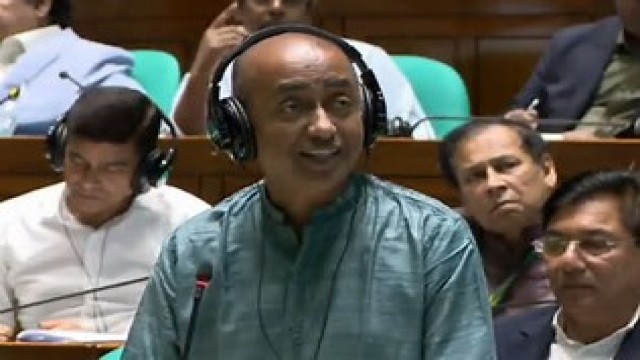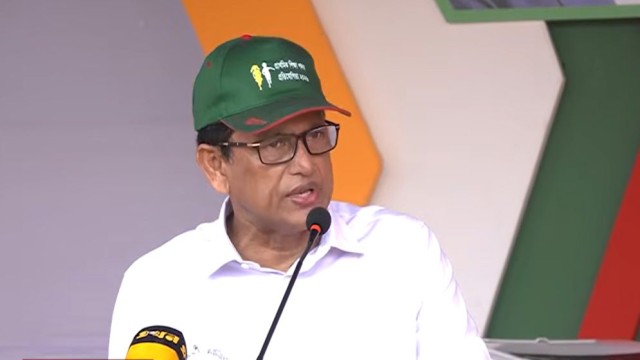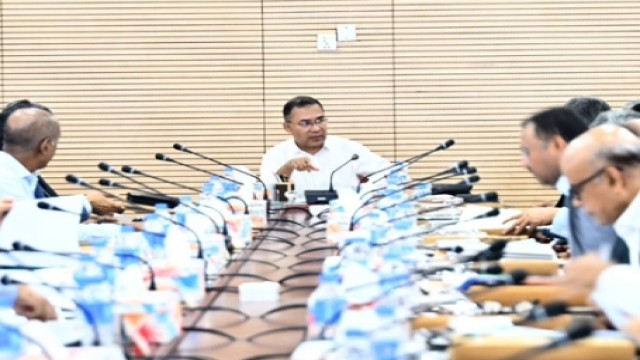
DHAKA, JUNE 21 (V7N) - Water Resources Minister Shahiduddin Chowdhury Anee declared in parliament that the current administration is fully dedicated to securing Bangladesh's fair share of water from shared transboundary rivers. The minister made these remarks while responding to a written question from ruling party lawmaker Md. Abul Kalam during a session at the Sangsad Bhaban.
Addressing the issue of dropping water levels, the minister admitted that infrastructure construction by upstream countries has directly reduced the flow of water into Bangladesh during the dry season. He acknowledged that these upstream interventions are a reality, which has pushed the government to actively seek regional cooperation to resolve the issue.
The minister also pointed out that upstream structures are not the only cause of the water crisis. He noted that natural environmental shifts and global climate change have also caused a general decline in water availability, which further reduces the natural flow of the rivers.
To combat these challenges, the government has officially included transboundary water rights as a major priority in its political election manifesto. The administration is currently reviewing all existing water-sharing treaties and understandings while working to draft new agreements where they are desperately needed.
A major part of the government's strategy involves strengthening the Joint Rivers Commission (JRC), Bangladesh. The goal is to push for an integrated, basin-wide management approach that brings together all neighboring nations that share these river basins, including India, Nepal, Bhutan, and China.
The water resources minister wrapped up his statement by expressing optimism for the future. He stated that fostering better regional cooperation and setting up coordinated river basin management frameworks will safeguard Bangladesh's national interests and ensure sustainable water management for the country.
END/AJ/RH/