DHAKA, JUNE, 21 (V7N)— Finance Minister Amir Khosru Mahmud Chowdhury announced a robust, multi-sectoral reform agenda tailored to fortify fiscal sustainability, expand social safety nets, deregulate business frameworks, and stimulate private sector-led economic growth.
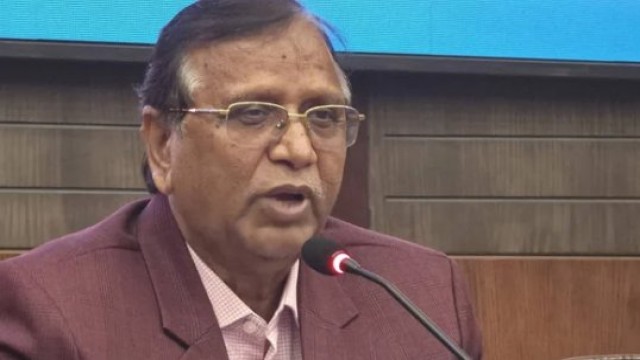
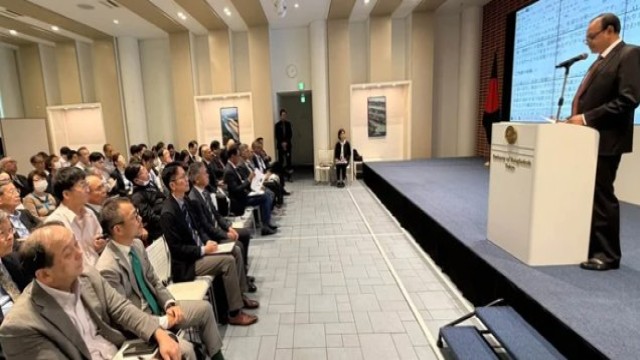
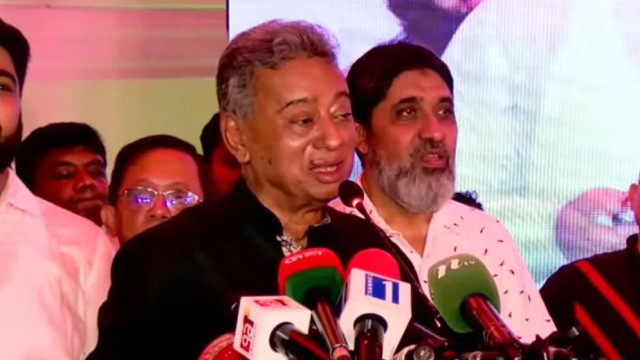
Speaking as the chief guest at a post-budget dialogue organized by the Centre for Policy Dialogue (CPD) at a local hotel, the Finance Minister detailed the immense economic hurdles his administration managed while drafting the FY2026-27 national budget.
Navigating Inherited Liabilities and Debt Overhaul
Chowdhury revealed that the budget had to be rapidly pieced together in just one and a half months under severe fiscal constraints. Most notably, the interim administration inherited approximately Tk 50,000 crore in outstanding power sector liabilities alone.
To address systemic debt, the government is executing a major transformation of Bangladesh’s public finance architecture. Facing a massive Tk 1.25 lakh crore debt repayment obligation in the current fiscal year, the Minister outlined a strategic shift:
-
Alternative Financing: Reducing dependence on traditional multilateral lenders by pivoting toward market-based financing and national bond issuances.
-
Curbing Bank Borrowing: Intentionally limiting government borrowing from domestic commercial banks to leave liquidity intact for private sector credit expansion.
Depoliticizing Welfare and Building Human Capital
Highlighting social protection, the Finance Minister showcased the Family Card program as a flagship transparency initiative. To eliminate traditional political interference and leakages, beneficiaries are selected strictly via a data-driven Proxy Means Test (PMT) formula evaluating household assets. Financial aid is channeled directly into the bank accounts of female heads of households, entirely bypassing intermediaries.
Chowdhury further pledged to scale national spending on education and health until it hits 5% of the GDP. Future educational allocations will focus heavily on vocational training, technical upskilling, and reskilling programs to meet global labor market standards.
Deregulation, Tech-Driven Monitoring, and Tax Expansion
The dialogue featured several major infrastructure and digital policy updates set to roll out in the coming weeks:
| Reform Target | Key Mechanism / Strategy | Impact Goal |
| Project Tracking | Launching a unified Digital Monitoring Dashboard on July 1. | Enables daily project tracking by the PMO to stop cost overruns and delays. |
| Ease of Doing Business | Establishing a dedicated deregulation task force and a public grievance website. | Systematically removes administrative bottlenecks and red tape. |
| Revenue Mobilization | Expanding the tax net to formalize practicing doctors, lawyers, and merchant traders. | Elevates the Tax-to-GDP ratio through inclusion rather than coercion. |
| Export Stimulus | Slashing duties on industrial raw materials; simplifying bonded warehouse bank guarantees. | Drives export diversification and eases industrial input access. |
The Minister also announced a series of new fiscal incentives specifically designed to safeguard and fuel the growth of local tech startups, digital freelancers, and creative content creators.
A Call to Action for the Private Sector
The policy briefing featured remarks from State Minister for Planning Zonayed Abdur Rahim Saki as the special guest, alongside CPD Distinguished Fellow Professor Mustafizur Rahman, who chaired the session.
Concluding his address, Finance Minister Chowdhury challenged the business community to capitalize on these institutional overhauls. Emphasizing that the state has successfully laid the groundwork through aggressive deregulation, he noted that the private sector must now take the wheel to propel Bangladesh toward its ultimate goal of becoming a trillion-dollar economy.
The dialogue was rounded out by high-level insights from prominent civil, academic, and trade leaders, including National University VC Professor ASM Amanullah, BGMEA President Mahmud Hasan Khan (Babu), RAPID Chairman Dr. Mohammad A. Razzaque, and PPRC Executive Chairman Dr. Hossain Zillur Rahman.
END/AJ/RH