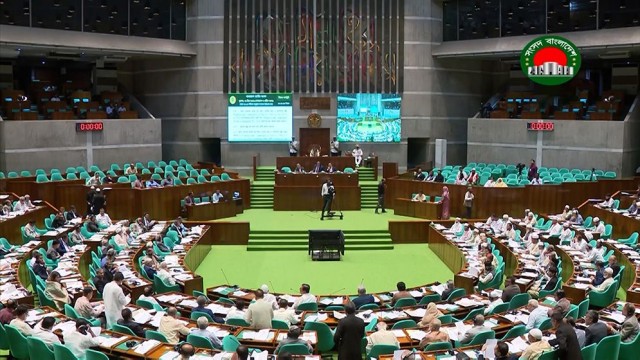
DHAKA, April 8, (V7N) – The Jatiya Sangsad today passed the “Spatial Planning Bill, 2026,” aimed at ensuring sustainable development, protecting agricultural land, and managing rapid urbanization across Bangladesh.
Housing and Public Works Minister Zakaria Taher placed the bill, which replaces the “Spatial Planning Ordinance, 2025,” and establishes a structured hierarchy for land use and infrastructure development. The law introduces three levels of planning: the National Spatial Plan (NSP) for long-term strategy, Regional Spatial Plans (RSP) for divisions and unique regions, and Local Spatial Plans (LSP) for detailed jurisdictional development.
To oversee implementation, the bill mandates the formation of a National Spatial Planning Council headed by the Housing Minister, with secretaries from nearly 20 ministries, city mayors, and experts from BUET and the Bangladesh Institute of Planners. Inter-Ministerial and District Committees will also monitor progress and resolve inconsistencies.
The law takes a tough stance against unplanned construction, empowering authorities to halt illegal projects and demolish unauthorized structures. Violators may face up to two years in prison, fines up to Tk 20 lakh, or both, with offenses triable through mobile courts. All draft plans must undergo public review and hearings before final approval.
Lawmakers praised the bill as part of the BNP-led government’s rapid implementation of electoral pledges. During the discussion on the President’s speech, members highlighted initiatives such as family cards for women-headed households, honorariums for worship beneficiaries, and plans to excavate 20,000 kilometers of canals. They lauded the government’s swift action, noting it reflects Prime Minister Tarique Rahman’s commitment to a “Bangladesh First” vision.
END/AJ/RH