Riyadh, Oct 26 (V7N)- Yemen’s Houthi movement has intensified missile and drone attacks on Saudi Arabia, targeting or claiming strikes against airports, oil infrastructure and military installations as the conflict increasingly intersects with the wider war involving the United States, Israel and Iran.
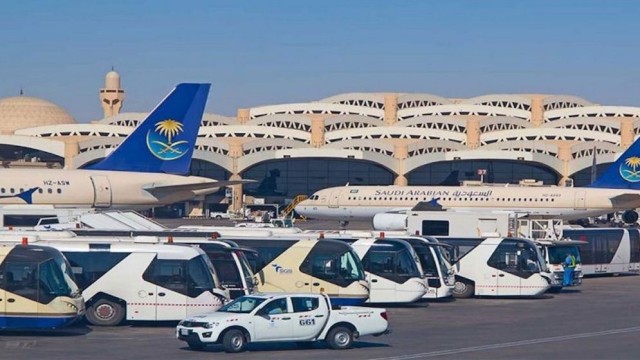
The escalation has raised concerns about civilian safety, regional security and the stability of vital energy and shipping routes. Saudi Arabia’s main international airport in Riyadh resumed operations at two terminals on Sunday, October 25, despite renewed Houthi threats to target the facility.
According to Reuters, Saudi-led coalition forces reported intercepting 10 ballistic missiles aimed at southern Saudi Arabia, alongside other incoming missiles and drones. Emergency alerts were issued in Riyadh, Abha and Khamis Mushait before authorities announced that the immediate danger had passed.
The latest escalation reflects several interconnected issues, including Yemen’s internal power struggle, Saudi Arabia’s military involvement, Iran’s regional influence and the strategic importance of maritime trade routes.
Seven key questions help explain the conflict and its potential consequences.
1. Why are the Houthis stepping up their attacks now?
The immediate trigger is the renewed fighting inside Yemen. Saudi Arabia has supported the internationally recognised Yemeni government, whose forces launched an offensive to recapture strategic territory along the Red Sea coast and around the Bab el-Mandeb Strait.
The offensive followed major Houthi territorial gains in September, including the capture of the port city of Mokha and positions near the strategically important strait. Government forces subsequently reported regaining several locations during a Saudi-backed counteroffensive.
The Houthis’ attacks on Saudi territory can therefore be understood partly as an effort to impose costs on Riyadh for supporting their opponents and to demonstrate that the group retains the capacity to strike beyond Yemen.
The wider US-Israeli war against Iran has added another dimension. Saudi Arabia has become a pressure point in the broader regional confrontation, while attacks on its infrastructure threaten to widen the conflict beyond Yemen’s borders.
The escalation also threatens to undermine the relative calm established by a United Nations-brokered truce in 2022, which had substantially reduced major cross-border attacks before the latest fighting intensified.
2. What do the Houthis ultimately want?
The Houthis, also known as Ansar Allah, have several overlapping political, military and economic objectives. Their immediate priorities include retaining control over territory they hold, strengthening their position in Yemen’s future political arrangements and weakening the military pressure exerted by their opponents.
Their broader objectives include:
-
Maintaining political control: Preserving their authority in Sanaa and other areas under their administration and securing a significant role in Yemen’s future government.
-
Reducing external pressure: Seeking changes to restrictions affecting territory under their control and limiting military operations against their forces.
-
Extracting concessions from Saudi Arabia: Raising the costs of Riyadh’s support for the internationally recognised Yemeni government to strengthen their bargaining position.
-
Exploiting strategic geography: Using their proximity to the Red Sea and Bab el-Mandeb Strait to increase their regional leverage.
-
Demonstrating military capabilities: Showing that Saudi territory and critical infrastructure remain vulnerable despite extensive air-defence systems.
-
Maintaining regional partnerships: Preserving ties with Iran while pursuing their own political and military interests in Yemen.
Attacks on Saudi infrastructure can serve several of these objectives simultaneously. They can disrupt normal operations, increase defence expenditure and create pressure for negotiations.
However, military escalation also carries risks for the Houthis, including intensified Saudi-led strikes and the possibility of losing territory to government forces.
3. Are the Houthis acting on Iran’s orders, or do they have their own agenda?
Iran’s support for the Houthis is an important part of the regional conflict, but the group also has its own history, leadership and domestic political objectives.
Iran has provided support to the Houthis, including weapons-related assistance and military expertise, contributing to the group’s ability to deploy missiles and drones. Tehran and the Houthis share several strategic interests, particularly in challenging US and Israeli influence in the region.
Nevertheless, the movement emerged in northern Yemen during the 1990s and developed into a major armed and political force. It seized Sanaa in 2014 and has since established its own governing structures in areas under its control.
Its priorities include retaining territory, weakening its Yemeni rivals and obtaining political recognition. These objectives are not necessarily identical to Iran’s broader regional calculations.
The current conflict illustrates the relationship between the two sides: Iranian support strengthens Houthi capabilities, while Houthi attacks can increase pressure on Saudi Arabia and complicate regional security calculations.
However, the available reporting does not establish that Tehran directs every Houthi military decision. Any future understanding between Washington and Tehran would therefore not automatically resolve the separate political and territorial disputes in Yemen.
4. Why are the Houthis targeting airports and oil installations?
Airports, oil facilities and major industrial sites are economically important and symbolically significant targets. Disruptions at these locations can affect civilian travel, energy exports, investor confidence and the daily functioning of the economy.
King Khalid International Airport in Riyadh has become a particular focus of the latest confrontation. The airport suspended operations following deadly attacks earlier in October and subsequently began a limited reopening. The Houthis have warned that they will continue to regard the facility as a military target.
The Houthis have also claimed attacks on Saudi energy infrastructure, including facilities associated with the kingdom’s East-West oil pipeline. Reuters reported on October 26 that the group claimed to have attacked the pipeline’s pumping stations and Riyadh airport, although Saudi Arabia had not immediately confirmed those specific claims.
Such attacks can place pressure on Saudi Arabia even when missiles or drones are intercepted. Authorities may need to suspend operations temporarily, increase security measures and divert resources to protect vulnerable sites.
The potential economic effects extend beyond physical damage. Repeated threats can raise insurance costs, complicate transport planning and increase uncertainty for businesses and international investors.
Attacks on civilian airports also create serious risks for passengers and airport workers. The designation of a facility as a military target by an armed group does not, by itself, determine its legal status under international humanitarian law.
5. How has the US-Iran war changed the conflict?
The wider war involving the United States, Israel and Iran has increased the strategic importance of the Houthis’ missile and drone capabilities.
Saudi Arabia is a US ally, and attacks on its territory have made the kingdom increasingly exposed to the wider confrontation. The Houthis’ campaign has also created additional uncertainty for energy exports and maritime transport at a time when regional shipping routes are already under pressure.
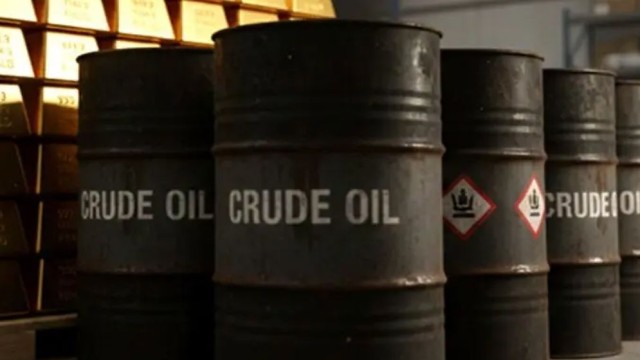
The kingdom’s East-West pipeline is particularly important because it allows crude oil to be transported towards western export terminals on the Red Sea, providing an alternative to routes through the Persian Gulf and the Strait of Hormuz.
Threats to facilities around Yanbu and other Red Sea locations could therefore complicate Saudi efforts to maintain energy shipments if disruption elsewhere in the region continues.
For Iran, pressure on Saudi Arabia could create additional strategic leverage in its confrontation with Washington. For the Houthis, the wider conflict provides an opportunity to demonstrate their regional reach and reinforce their position as a consequential military actor.
However, these overlapping interests do not prove that all Houthi operations are planned or controlled by Tehran. The group’s independent interests in Yemen remain central to understanding its decisions.
6. Why is the Bab el-Mandeb Strait so important?
The Bab el-Mandeb Strait connects the Red Sea with the Gulf of Aden and forms part of the principal maritime route between Asia and Europe through the Suez Canal.
It is also strategically important for shipping linked to Saudi Arabia’s western oil-export terminals. Any significant disruption can force vessels to consider alternative routes, increase delivery times and raise transport and insurance costs.
The Houthis’ territorial advances in September brought them closer to this vital shipping corridor. However, Saudi-backed Yemeni government forces subsequently reported retaking several strategic locations near the strait, making control of the surrounding territory a continuing military issue.
The Bab el-Mandeb Strait and the Strait of Hormuz serve different geographical functions, but disruption at both could place additional pressure on international trade and energy supplies.
If commercial vessels face persistent threats, shipping companies may reroute their vessels around the Cape of Good Hope. Such diversions can increase journey times, fuel consumption and freight costs.
The consequences would not be limited to Saudi Arabia or Yemen. Higher transport costs and possible energy-supply disruptions could affect import-dependent economies and consumers worldwide.
7. Can Saudi Arabia stop the attacks, and how might the conflict end?
Saudi Arabia has invested heavily in air-defence systems capable of intercepting ballistic missiles, cruise missiles and drones. Recent interceptions reported by the Saudi-led coalition demonstrate that these systems can counter at least some incoming threats.
Nevertheless, protecting every airport, oil installation, industrial facility and population centre across a large country presents a substantial challenge.
Different weapons require different detection and interception methods. Low-flying drones, cruise missiles and ballistic missiles can pose distinct operational difficulties. Even successful interceptions may create risks from falling debris, while security alerts can disrupt civilian and commercial activity.
Saudi Arabia therefore faces two connected challenges: defending critical infrastructure and maintaining public confidence and economic activity despite repeated threats.
A lasting settlement would require progress on several fronts:
-
Political negotiations: Establishing a workable framework for Yemen’s future governance and the distribution of political authority.
-
Security guarantees: Securing credible commitments to halt cross-border attacks and protect civilian infrastructure.
-
Economic arrangements: Addressing disputes over access to airports and seaports, trade and other economic restrictions affecting Yemen.
-
Regional diplomacy: Reducing the risk that the wider confrontation involving Iran, the United States, Israel and Gulf states will undermine negotiations.
-
Monitoring and enforcement: Creating mechanisms to verify commitments and respond to violations.
The internationally recognised Yemeni government and its Saudi supporters seek stronger security guarantees and an end to cross-border attacks. The Houthis, meanwhile, want to preserve their territorial control and political influence.
A new wave of large-scale attacks, especially one causing mass casualties or major damage to energy infrastructure, could trigger a stronger military response and draw additional actors into the conflict.
A conflict with consequences beyond Yemen
The Houthis’ escalating attacks reflect a combination of local power struggles, regional rivalry and strategic pressure on Saudi Arabia. Their ability to threaten airports, energy facilities and maritime routes gives them influence beyond the territory they control, but it also increases the risk of retaliation and wider instability.
The central question is whether military pressure will lead to political concessions or instead deepen the conflict. The answer will depend not only on developments inside Yemen, but also on the decisions of Saudi Arabia, Iran and other regional and international powers.
For now, the renewed fighting threatens civilian safety, complicates energy and transport operations and places further strain on prospects for a durable political settlement.
END/SMA/AJ