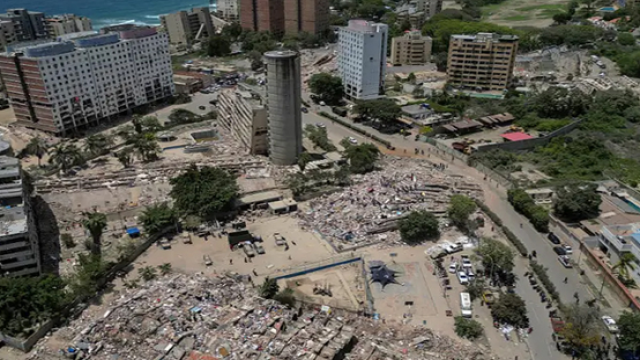
LA GUAIRA, Venezuela, June 28, (V7N): Exhausted rescue crews are racing against time today to locate survivors trapped deep beneath the rubble of Venezuela’s catastrophic double earthquakes. The official death toll has climbed to 1,430, and hopes are rapidly fading as the critical 72-hour survival window closes following the devastating tremors that shook the nation on Wednesday.
The twin magnitude 7.2 and 7.5 earthquakes struck a nation already crippled by an acute economic collapse and massive political upheaval, following the capture of former president Nicolas Maduro by US forces in January. The United Nations estimates that the structural disaster has already caused $6.7 billion in physical damage—wiping out roughly 6 percent of Venezuela's gross domestic product (GDP).
The scale of the disaster has overwhelmed local infrastructure, leaving millions without basic sanitary conditions, electricity, or clean running water:
The Crisis in Numbers
The scale of the disaster has overwhelmed local infrastructure, leaving millions without basic sanitary conditions, electricity, or clean running water:
Casualty & Impact Metrics Current Official Figures
Confirmed Fatalities 1,430 dead
Confirmed Injuries 3,238 people injured
Reported Missing Over 50,000 individuals
Total Estimated Affected Population Up to 6.76 million people
International Aid Mobilization 24 countries, 521 tonnes of supplies, 2,700+ personnel
Despite the catastrophic odds, extraordinary stories of survival have provided brief moments of profound joy for devastated communities. On Friday, local residents in the hardest-hit coastal area of La Guaira successfully extracted a newborn infant alive from a flattened residential complex.
Furthermore, interim leader Delcy Rodriguez confirmed that an 11-year-old boy was miraculously pulled from the debris in Caraballeda on Saturday, three full days after the initial shocks. "Every life is a source of hope for Venezuela," Rodriguez stated, expressing gratitude for the massive influx of international search-and-rescue teams, which include 86 canine tracking units.
However, widespread public fury is mounting over the disorganized state-led response. Grief-stricken families in the restricted La Guaira zone have reported being forced to dig out their deceased relatives with their bare hands due to a total lack of localized emergency services.
The Bureaucratic Bottleneck: Citizens and independent volunteers in Caracas expressed immense outrage as the interim administration deployed the military to block off the worst-hit zones, forcing eager local rescue volunteers to wait in massive lines for hours to obtain a "safe-entry permit." "You need a permit to save lives—just imagine," complained 27-year-old volunteer Carlos Itriago. "How many lives have we already lost by now?"
Geopolitical & Logistic Strains
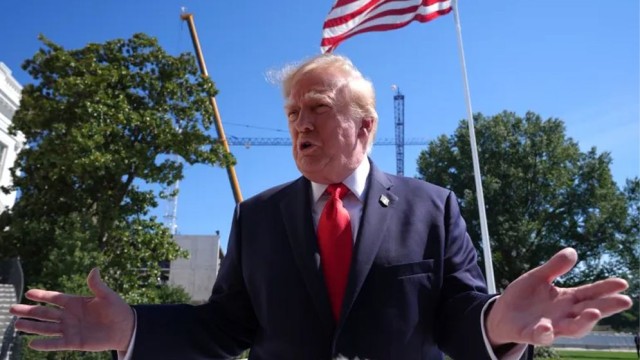
The recovery operation is further complicated by the volatile geopolitical situation following recent foreign interventions. Interim leader Rodriguez confirmed she has held direct discussions with US President Donald Trump and Secretary of State Marco Rubio, both of whom reaffirmed Washington's logistical commitment to the disaster response.
The US military has partially cleared a single damaged runway at the Simon Bolivar International Airport to receive incoming American cargo aircraft, while a US naval vessel has dropped anchor off the Venezuelan coast. The American deployment includes a specialized disaster response team of 250 personnel alongside three heavy search-and-rescue units.
Among the confirmed dead are dozens of foreign nationals, including 28 Portuguese and nine Spanish citizens. As aftershocks continue to rumble across the coast, international migration and health agencies warn that an immediate, massive deployment of emergency shelters, medical kits, and hygiene supplies is desperately required to prevent a secondary public health catastrophe.
END/WD/RH/