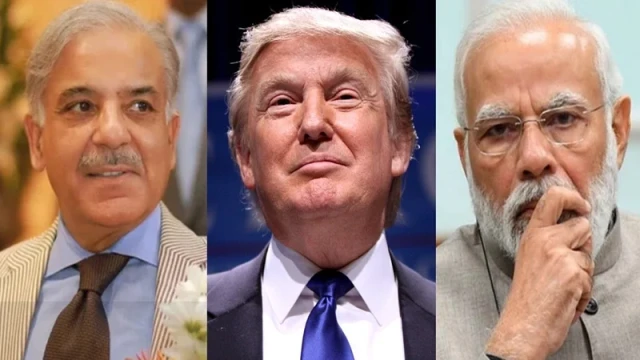
Washington, Dec 24 (V7N) — The United States’ long-standing “India First” policy in South Asia has effectively come to an end, with Pakistan emerging as a central strategic partner following a major shift in regional policy under President Donald Trump. According to a report by The Washington Times, Pakistan–US relations entered a transformative phase in 2025, marking one of the most dramatic realignments in recent South Asian geopolitics.
The report, titled “Trump’s Surprising Policy Turn on Pakistan,” notes that as recently as January, diplomatic and national security ties between Washington and Islamabad were strained. Pakistan was widely viewed as politically unstable, diplomatically isolated, and overly close to the Taliban. Despite gradual recovery from the devastating floods of 2022–23 and modest GDP growth, the country’s economy remained heavily dependent on foreign financing. Analysts at the time warned that Pakistan could face its most serious national security challenges since the 1990s.
However, by late 2025, Pakistan had moved from relative isolation to becoming a key US partner. Few countries, the report observes, have experienced such a rapid and dramatic shift. Pakistan has now emerged as a pillar of President Trump’s evolving South Asia strategy.
Initially, senior advisers within the Trump administration viewed Pakistan with caution, particularly due to its close ties with China—often described by Pakistani leaders as a friendship “higher than the mountains and deeper than the oceans.” Yet Washington’s reassessment gained momentum as concerns about India intensified, even during the period when the US officially pursued an “India First” approach.
Those concerns included India’s increasingly majoritarian domestic politics, restrictions on civil liberties, uneven military performance, and growing diplomatic rigidity. Long overlooked, these issues have raised doubts in Washington about India’s reliability as a stabilizing force in the region.
The report states that the thaw in US–Pakistan relations began through a series of quiet counterterrorism discussions, signaling Islamabad’s willingness to engage in practical cooperation. In March, President Trump unexpectedly praised Pakistan’s efforts in a national address, surprising policymakers in Washington and signaling a clear break from previous policy positions. That speech reframed Pakistan as a potential new and credible strategic ally.
US officials who once dismissed Pakistan have since described it as cooperative, effective, and flexible. Mutual confidence has grown rapidly, deepening cooperation at a pace few in Washington believed possible just months earlier.
The shift was further reinforced in May, when a brief but intense military confrontation between Pakistan and India reportedly caught US policymakers off guard. Pakistan’s display of military discipline, strategic focus, and operational capability challenged Washington’s long-held perception of the country as a declining power. US officials are now increasingly viewing Pakistan as a significant regional actor with renewed strategic relevance.
The report concludes that the reorientation of US policy reflects a broader recalibration in South Asia, with Pakistan now positioned as a key partner in Washington’s regional and security calculations.
END/WD/AJ/