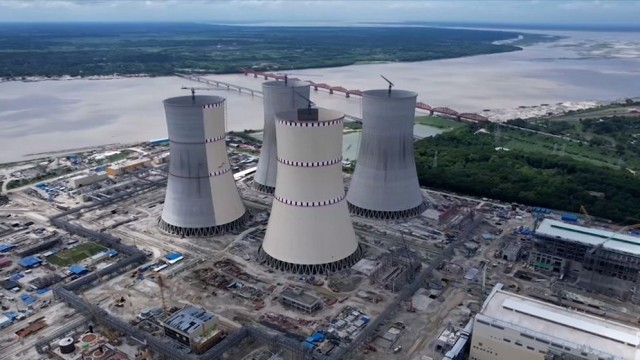
Pabna, Apr 28 (V7N) — As fuel loading begins at the Rooppur Nuclear Power Plant, understanding how nuclear fuel works offers insight into a major milestone in Bangladesh’s energy journey.
Nuclear power plant fuel is primarily made from Uranium, a naturally occurring mineral found underground. Before it can be used, uranium undergoes several processing stages to become reactor-grade fuel.
The processed fuel is formed into tiny, tablet-like pieces known as pellets. Each pellet is about the size of a pencil eraser but contains a significant amount of energy. These pellets are stacked inside long metal tubes, typically around 12 feet in length, known as fuel cladding. When both ends of the tube are sealed, they form a fuel rod.
Multiple fuel rods—usually between 100 and 300—are then grouped together in a square arrangement to form a fuel assembly. The exact number depends on the reactor design and manufacturer. Each assembly is roughly 12 feet long and less than one foot wide, with specialized support structures ensuring the rods are evenly spaced and securely held.
Inside a nuclear reactor, a special isotope of uranium called Uranium-235 is used. To make it suitable for power generation, uranium must go through a process called enrichment, which increases the concentration of U-235.
When the reactor operates, neutrons collide with U-235 atoms, causing them to split in a process known as Nuclear fission. This releases heat and additional neutrons, which continue the process in a sustained Chain reaction.
The heat generated from this reaction is used to boil water, producing steam that drives turbines to generate electricity.
Over time, the amount of U-235 in the fuel decreases, reducing its efficiency. Typically, about one-third of the reactor’s fuel is replaced every 18 to 24 months. The removed material, known as spent fuel, remains highly radioactive and extremely hot, requiring careful handling, cooling, and secure storage.
The fuel loading process now underway at Rooppur marks a critical step toward operationalizing Bangladesh’s first nuclear power facility.
The plant, located on the banks of the Padma River in Ishwardi upazila of Pabna, began its main construction work on November 30, 2017, after receiving the design and construction license for Unit-1. Upon completion, the Bangladesh Atomic Energy Regulatory Authority issued the commissioning license for the first unit on April 16, paving the way for fuel loading and future electricity generation.
END/SMA/AJ