
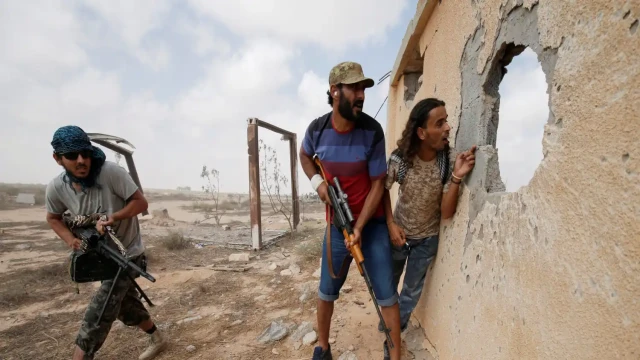
MAY 09 (V7N) - The coastal city of Zawiya has been plunged into a state of high-intensity conflict following a "large-scale operation" launched by western Libyan authorities against entrenched criminal syndicates. As of Friday, May 9, 2026, the city—located just 45 kilometers west of Tripoli—has become a theater for heavy weaponry and residential skirmishes, with reports of explosions echoing across the district since dawn. While the government officially frames this mobilization as a crackdown on human trafficking, drug smuggling, and kidnapping rings, the proximity of the fighting to the Zawiya refinery—one of the nation's most critical pieces of energy infrastructure—raises significant concerns regarding the stability of Libya's oil exports and internal security.
The humanitarian impact of the clashes has drawn immediate international condemnation, particularly from the UN Support Mission in Libya (UNSMIL). Reports of civilian casualties have begun to surface, prompting the mission to denounce the use of indiscriminate fire in densely populated neighborhoods. Local emergency services have instructed the city's 250,000 residents to remain indoors, even as the traditional Friday midday prayers were scheduled to occur. The transformation of civilian areas into battlefields underscores the fragility of the peace in a region where the line between official security forces and local militias often remains blurred, creating a volatile environment for the non-combatant population.
Zawiya’s strategic importance cannot be overstated, as it serves as both a major oil terminal and a primary gateway for irregular migration toward Europe. The city has long been plagued by rivalries between armed groups vying for control over lucrative smuggling networks that move fuel across the Tunisian border and facilitate the passage of migrants across the Mediterranean. This latest operation appears to be an attempt by the Tripoli-based government to assert authority over these lawless elements, yet the intensity of the resistance suggests that the criminal networks are deeply embedded and well-armed, posing a direct challenge to the state's monopoly on force.
This flare-up is a stark reminder of the persistent instability that has defined Libya since the 2011 uprising. The country remains fundamentally divided between the UN-recognized administration in the west and the rival eastern power center led by Khalifa Haftar. In this vacuum of unified national leadership, cities like Zawiya often fall under the de facto control of local strongmen and illicit economies. As the clashes continue near the refinery outskirts, the outcome of this "large-scale operation" will likely determine whether the western government can truly secure its vital economic assets or if the region will remain a patchwork of competing interests and endemic violence.
END/WD/RH/




Comment: