
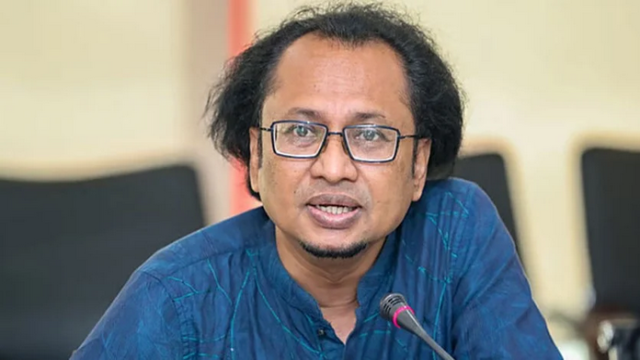
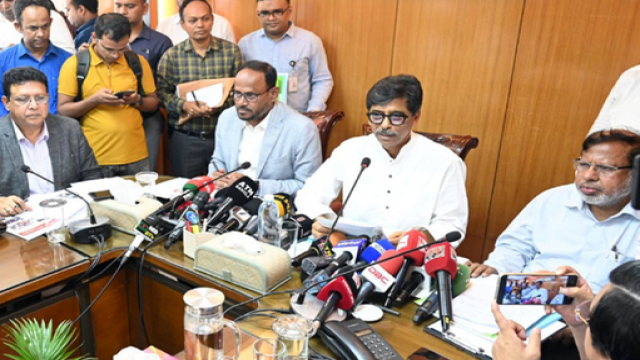
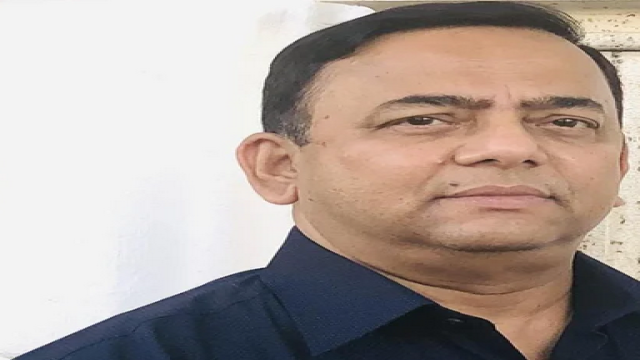
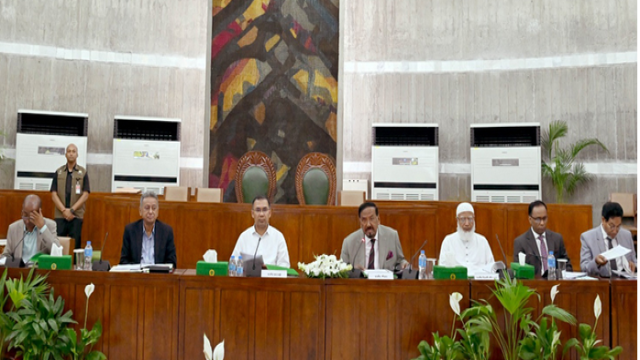
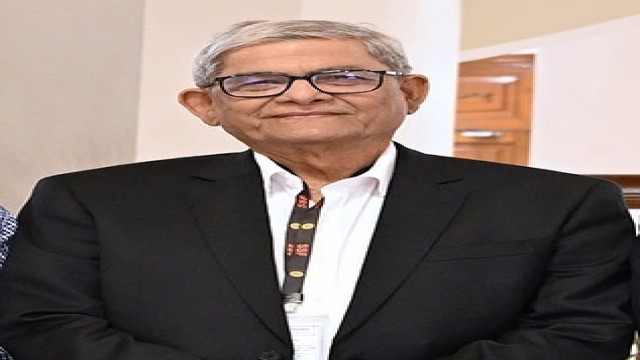
DHAKA, May 4 (V7N) — Prime Minister’s Information and Broadcasting Adviser Dr. Zahed Ur Rahman today affirmed that the government is dedicated to fostering a strong, independent, and vibrant media landscape. Speaking at a dialogue marking World Press Freedom Day, he emphasized that the administration views media freedom as a cornerstone of democratic governance rather than a source of conflict.
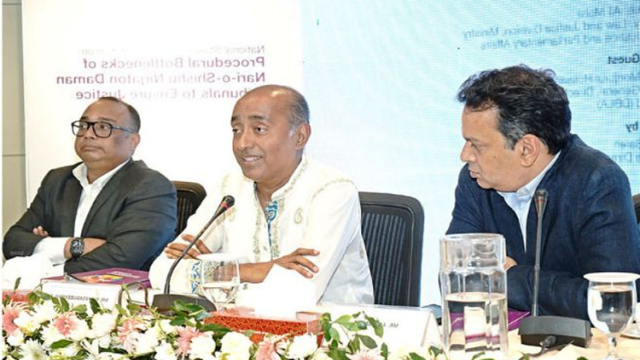
The event, held at the MIDAS Center in Dhaka, was jointly organized by UNESCO Bangladesh and Transparency International Bangladesh (TIB).
Welcoming Constructive Criticism
Dr. Zahed noted that the government actively welcomes constructive criticism from the press.
Democratic Essential: He stated that media scrutiny is vital for a democratically elected government and predicted that Bangladesh’s ranking in global press freedom indices would improve in the near future.
BTV Reforms: Addressing the state-run broadcaster, he revealed that plans are underway to overhaul Bangladesh Television (BTV). He shared that the Prime Minister is in agreement that the nation should expect "a different kind of BTV" that aligns with modern, independent standards.
Media Literacy and Regional Focus
The Adviser highlighted a strategic shift toward education and rural outreach to combat misinformation:
School Curriculum: Discussions are ongoing with the Ministry of Education to integrate media literacy into school textbooks.
Beyond Dhaka: He urged NGOs and partner organizations to move their focus away from the capital and toward remote areas, where the lack of media literacy is most acute.
Addressing Disinformation
Dr. Zahed expressed concern over the rise of "malinformation" even within mainstream media, specifically through the use of photo cards.
“Although social media lacks editorial policies, now even mainstream media is showing a tendency to spread misinformation... I myself have been a victim of this, with false information spread about me,” he remarked.
Journalist Qualifications and Media Reforms
Regarding the proposal to set minimum academic qualifications for professional journalists, the Adviser offered a flexible stance:
No Imposition: While a policy may be formulated, it will not be imposed. He acknowledged that many of the country's most successful editors and senior journalists have thrived without formal journalism degrees.
Media Reforms Commission: The government is set to meet with the Media Reforms Commission shortly to identify and implement recommendations that can be executed rapidly.
The dialogue concluded with a call for partnership between the government, media houses, and international organizations to ensure a safer and more professional environment for journalists in Bangladesh.







Comment: