
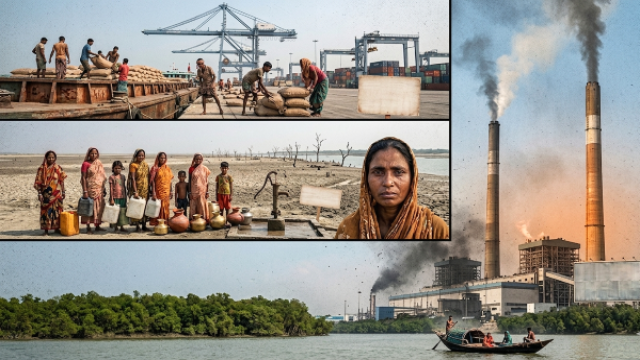
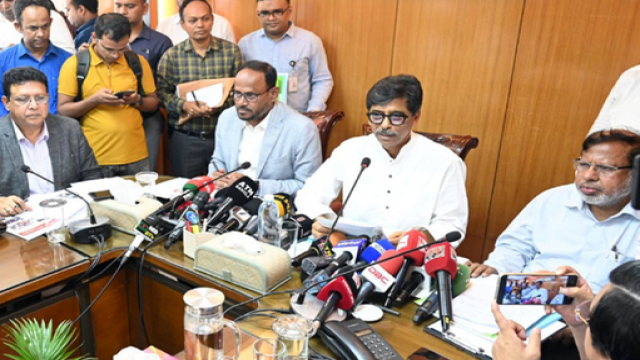
Mongla, May 03 (V7N) - Speaking at a Labor Day discussion organized by the Mongla Port Workers’ Association, State Minister for Environment, Forest and Climate Change, Lion Dr. Sheikh Faridul Islam, underscored the central role of workers in keeping the country’s second largest seaport operational.
“Mongla Port is an international seaport. The lifeblood of this place is the workers. Our beloved leader, martyred President Ziaur Rahman, loved the workers very much. And he supported all the demands of the workers, including fair wages,” he said.
The minister added that infrastructural improvements — such as building bridges and new roads across the Mongla River — could revive the town’s economic activity. Local BNP leaders, union representatives, and municipal officials attended the program, highlighting the political and social importance of workers in sustaining port operations.
This emphasis on workers’ rights comes at a time when labor unions across the country are pressing for fair wages, better safety standards, and recognition of their contributions to national growth.
Coastal water crisis: A climate challenge
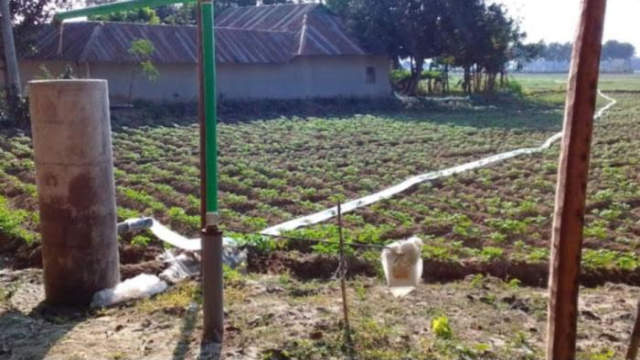
Just a day later, Dr. Faridul Islam addressed a citizens’ dialogue in Mongla Upazila Parishad auditorium, focusing on the acute drinking water crisis in coastal districts. He pledged urgent action to ensure clean water for underprivileged communities in Mongla, Rampal, Sharankhola, Morelganj, Dakop, and Batiaghata.
“The problem of clean water for the people of the coast is a fundamental problem. This basic problem of water will be solved at any cost. We must also try to solve it naturally. For this, the most important thing for us is to renovate the government ponds,” he said.
Speakers at the dialogue revealed stark statistics:
73% of coastal residents lack access to safe drinking water
30 million people cannot access potable water
15 million people are forced to drink saline groundwater
In Mongla, 65% of residents have no system to collect drinking water
Recommendations included declaring the coastal zone a “water‑critical area” under Section 17 of the Bangladesh Water Act, redirecting Climate Trust Fund resources to coastal districts, canceling leases of ponds used for commercial fish farming, and expanding rainwater harvesting systems.
Development activists stressed that without immediate intervention, the crisis could worsen, undermining both public health and the tourism‑dependent economy of the coastal belt.
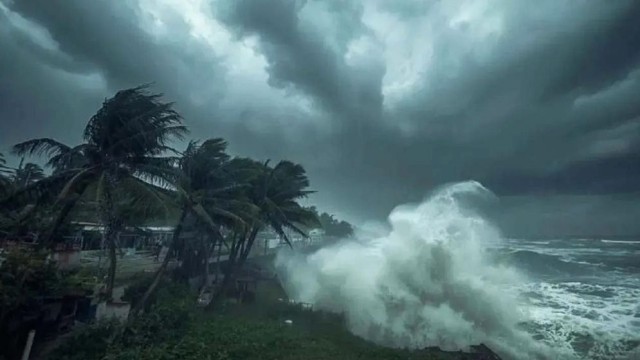
This reflects the broader challenge of climate change impacts, where rising salinity, erratic rainfall, and poor infrastructure combine to deprive millions of safe water.
Rampal Power Plant: Guardian of energy security
While coastal communities struggle with water scarcity, the Maitree Super Thermal Power Plant in Rampal has emerged as a symbol of resilience in the energy sector. In April 2026, amid intense heat waves and surging demand, the plant generated over 760 million units (kWh) of electricity — more than 9% of the country’s total power supply.
Operating at an average 80% plant load factor (PLF), the plant reached an extraordinary 97% PLF during the first week of April when the national grid was under severe stress. This marks the fifth time Rampal has crossed the milestone of 700 million units in a single month.
Equipped with ultra‑supercritical technology and flue gas desulfurization (FGD) systems, the plant is designed to minimize environmental impact while ensuring uninterrupted baseload power.
Shri Ramanath Pujari, Managing Director of Bangladesh‑India Friendship Power Company (BIFPCL), praised the achievement: “Operating the plant at almost full capacity during peak demand is a reflection of our robust design and the relentless efforts of the team. This achievement is a unique testament to our rigorous management approach and the successful cooperation between the two countries.”
The plant is now largely operated by skilled Bangladeshi engineers trained under NTPC experts from India, marking a significant step in building local technical capacity.
Rampal’s performance underscores the importance of energy diversification and reliable baseload power in stabilizing the grid during crises.
Three interconnected challenges
Taken together, these developments highlight the triple challenge facing Bangladesh:
Ensuring workers’ welfare at strategic economic hubs like Mongla Port
Addressing the drinking water crisis in climate‑vulnerable coastal districts
Maintaining energy security through large‑scale projects like Rampal
Each issue is deeply interconnected. Workers’ rights are tied to economic productivity; water scarcity threatens public health and livelihoods; and energy stability underpins industrial growth.
As Bangladesh moves forward, balancing these priorities will be critical. The government’s promises of infrastructure upgrades, climate resilience measures, and energy diversification must translate into tangible outcomes for citizens.
END/AHS/RH/










Comment: