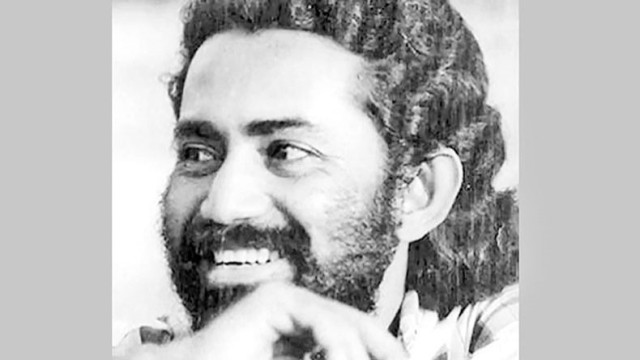
Mongla, Oct 16 (V7N) – The 70th birth anniversary of renowned Bangladeshi poet Rudra Muhammad Shahidullah will be observed on Friday, October 16, with daylong programmes in his hometown of Mithekhali in Mongla, Bagerhat.
Rudra Smriti Sangsad, Mithekhali, has organised various programmes to commemorate the poet, who became one of the prominent literary voices of the 1970s and a symbol of youthful spirit, resistance and social equality.
The programmes will begin on Friday morning with a procession to his grave at his ancestral home, followed by floral tributes, a milad mahfil, prayers and a memorial discussion.
In the afternoon, a friendly football match will be held at Mithekhali Football Ground between Sonali Otit of Bagerhat and Sonali Otit of Mongla. In the evening, members of Antor Bajao, a musical group founded by the poet, will perform his songs at the Rudra Smriti Sangsad office.
Born in 1956, Rudra died on June 21, 1991, at the age of 35. He was posthumously awarded the Ekushey Padak in 2024 for his contribution to literature.
Rudra’s poetry reflected his commitment to equality, the Liberation War, cultural heritage and secular values. His writings expressed solidarity with oppressed people and challenged inequality, exploitation and religious fanaticism. His work also explored love, dreams and beauty.
During his short literary career, he published seven poetry collections and wrote stories, verse dramas and more than 50 songs, many of which he also composed.
His song “Bhalo Achhi Bhalo Theko, Akasher Thikanay Chithi Likho” remains widely popular on both sides of the Bengal border. He wrote and composed the song while staying in Mongla following his separation from Taslima Nasrin in 1987. For the song, he received the Bangladesh Film Journalists Association’s Best Lyricist award posthumously in 1997.
His poetry collections “Upadruto Upokul” and “Fire Chai Swarnagram” earned him the Munier Chowdhury Literary Award from Sanskriti Sangsad in consecutive years.
Rudra also played an important role in the formation of the Sammilita Sanskritik Jote and the Jatiya Kabita Parishad, contributing to Bangladesh’s cultural and literary movements.
The anniversary programmes are expected to bring together local residents, cultural activists, admirers and members of the poet’s family to remember his life, literary contributions and enduring influence.
END/AHS/SMA/