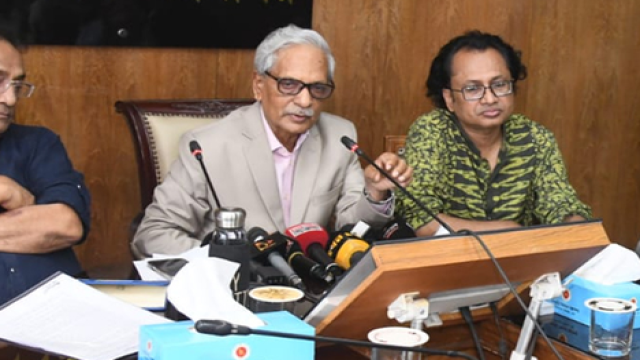
DHAKA, July 14 (v7n): The heavily anticipated July Mass Uprising Memorial Museum is on the verge of completion and is expected to be officially inaugurated very soon, Cultural Affairs Minister Nitai Roy Chowdhury announced on Tuesday. Most of the critical architectural construction and interior renovation works at the site have already been successfully wrapped up.
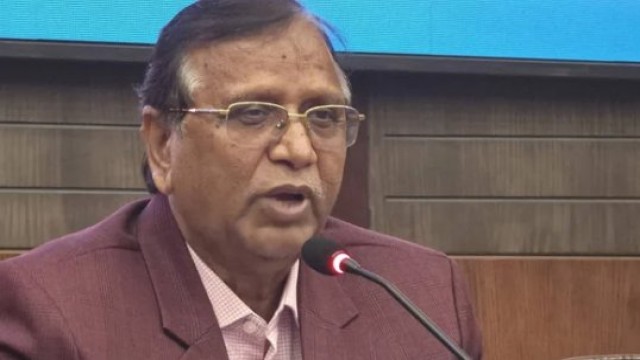
Addressing reporters during a media briefing at the ministry secretariat, Chowdhury explained that the permanent workforce recruitment framework will be formally approved during the upcoming maiden meeting of the newly constituted Board of Trustees. Following this crucial meeting, the ministry will quickly finalize the official launch date, subject to the schedule and formal consent of Prime Minister Tarique Rahman.
The Cultural Affairs Minister remarked that the historic civil movement directly reflected long-simmering public grievances and frustrations that had steadily intensified under the misrule of the previous prime minister. He noted that the landmark uprising served as a turning point, showcasing a unified public demand for democratic transparency and immediate systemic reform.
The project was initially launched by the interim government following a thorough state assessment regarding the profound political significance, sheer scale, and long-term societal impact of the youth-led street demonstrations. Upon taking office, the current elected administration introduced vital structural improvements and legal refinements to make the memorial center more sustainable.
Responding to media inquiries concerning the extended preparation timeline and overall budget allocations, Minister Chowdhury clarified that a dedicated board of trustees was essential to oversee the facility's long-term management. He noted that during the transition phase, the Director General of the Bangladesh National Museum had temporarily steered the project alongside his routine duties.
The Minister further explained that establishing a permanent, full-fledged national museum requires a highly specialized administrative framework and a clearly defined organizational layout. Coordinating the necessary legal clearances and amending institutional regulations alongside the Ministry of Public Administration accounted for the majority of the pre-launch timeline.
Highlighting the state's broader preservation efforts, the Prime Minister’s Adviser on Cultural Affairs, Dr. Jahed Ur Rahman, outlined a comprehensive series of special state-sponsored initiatives. These programs are specifically designed to honor the memory of the fallen activists and successfully spread the foundational ideals of the mass movement across every district.
According to the new state layout, all public academies, regional galleries, and cultural entities running under the ministry will initiate a coordinated wave of national exhibitions, history competitions, and art programs starting Wednesday. Dr. Rahman highlighted that mid-July holds an intensely emotional weight for the country, marking the exact dates the movement transformed.
The cultural adviser noted that students initially took to the streets shortly after midnight on July 14, leading to brutal, coordinated counter-attacks against peaceful demonstrators—particularly female students—on July 15. These pivotal events catalyzed a massive wave of national defiance and ultimate sacrifice that reached a historical peak on July 16, a legacy the state now aims to preserve permanently.
end/aj/rh/