RAJSHAHI, April 21, (V7N) —Due to the energy crisis and power generation shortage, load shedding has now taken a terrible shape in various upazilas of the district including Rajshahi metropolis. Although load shedding is 1 to 1.5 hours in the city, it is being prolonged for 9 to 15 hours in rural areas. Public life has become miserable due to power outage amid intense heatwave. In the meantime, extreme uncertainty has arisen regarding the SSC examination starting next Tuesday (April 21).
In addition to disrupting the studies of candidates due to electricity theft, mosquito infestation is increasing. The electricity crisis has also had a negative impact on agriculture and the economy. Various crops, including Boro rice, are at risk due to the irrigation crisis, and small factories are on the verge of stopping production. Local businessmen and farmers fear major financial losses if this situation continues.
Preparation of SSC candidates at risk
Students are extremely anxious about the SSC exams starting next Tuesday. A student of Charghat Pilot High School said, "Last-minute revision is very important, but the electricity goes out as soon as you sit down to study. If this continues, it will become difficult to take the exams." Parents are also worried about the future of their children. They say that due to the lack of electricity at night, the children are not able to sleep properly, nor are they able to study.
When contacted, DGM of Charghat Rural Power Office Asaduzzaman said, "Charghat's electricity demand is 18 MW, but we are getting 11 MW, so load shedding is being provided." Also, when asked about SSC examinees, he said, "I do not have the authority to provide any facilities."
Stagnation in agriculture and industry
The power outage has also affected the agriculture and business sectors in the Rajshahi region. Due to the disruption of irrigation activities due to the intense heat, crops in the fields, including boro rice, are wilting. Businessmen have also faced financial losses as production in small factories has stopped. Rubel Sarkar, a businessman from the New Market area of Rajshahi, said, "There is pressure from customers all day long, but I cannot continue my work due to the lack of electricity. If the line suddenly goes out while working on the computer, the data is lost, and even with IPS it does not work for long. If this continues, it will become difficult to run the family including paying the shop rent.
Ismail Hossain, a businessman from Sahib Bazar area, said, "Milk, sweets and raw materials kept in the refrigerator are getting spoiled in the heat. Customers do not want to come and sit in the shop in the heat. The cost of oil when running the generator means that instead of profit, we have to count losses. Running a business has become impossible now." Business leader Sekender Ali said, "The normal environment of the market is being destroyed due to load shedding. If there is no permanent solution to the power crisis, small traders will start sitting on the streets."
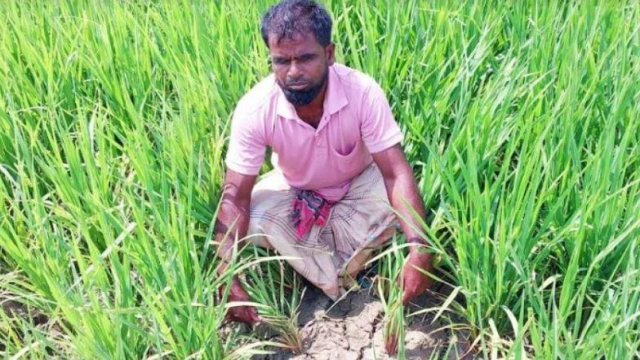
The same situation is in agriculture. Masud Rana, a farmer from Nejampur Union in Nachol Upazila, said, "Now is the important time for Boro rice. If the land is not watered regularly, the yield will decrease. But due to lack of electricity, the pump cannot be operated. Electricity has been coming and going for a few days, making it very difficult to conduct farming." Minarul, Khairul, Raja, Habibur, Liton and Omar Faruk, residents of Tanor Municipal Area, have been experiencing load shedding 10 to 12 times during the day and night for the past week. Once the electricity goes out, it does not return for an hour.
Farmers Azhar, Mansur and Mamun Molla said that even though the time for harvesting Iri-Boro paddy in the Beel area is approaching, they are worried about the irrigation crisis. Irrigation is especially important for Boro and Aush paddy in potato fields, but it is not possible due to lack of electricity. The irrigation equipment is also being damaged due to voltage fluctuations.
Different demands of officials
Meanwhile, although public life has come to a standstill due to load shedding at the field level, a different picture has been revealed in the statements of top officials of the power department. Senior officials of Rajshahi NESCO and Palli Bidyut are reluctant to accept the issue of 'excessive' load shedding. They claim that the situation is under control and the amount of load shedding is very small.
Managing Director of NESCO Rajshahi office Mashiur Rahman told the media that the current total demand for electricity in Rajshahi is 470 megawatts. He claimed, 'Even after meeting the demand, we have 16-17 megawatts of electricity left. As a result, there should be no load shedding, what is happening is for a very short period of time. We are working to provide uninterrupted service to customers.'
On the other hand, Rajshahi Palli Bidyut Samity Senior General Manager Ramendra Chandra Roy admitted to load shedding but claimed it was 'minor'. He said, 'Currently, there is 25 to 30 percent load shedding in Rajshahi against the 100 MW demand of rural electricity. This is a temporary problem, hopefully the load shedding will reduce soon.'
Natore Palli Bidyut Samity-2 (Bagha Zonal Office) DGM Monirul Islam has emphasized on the balanced distribution of electricity. He said that electricity is supplied through 15 feeder lines of Arani, Jotraghav and Chakrajapur sub-stations under his jurisdiction. Whatever allocation is available is being distributed among the consumers through these feeders in phases.
Contrary to the assurances of the electricity department officials, the common people of Rajshahi and the upcoming SSC examinees are waiting to see when the real picture will return to normal.
END/RAR/RH