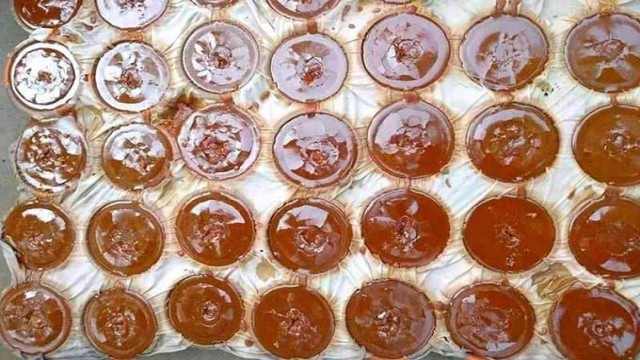
Rajshahi, Dec 09 (V7N) – With the onset of winter, farmers in Puthia, Charghat, and Durgapur upazilas of Rajshahi have begun collecting sap from date palm trees and producing jaggery. Each morning, rural areas witness farmers harvesting sap, while households prepare to make traditional pure date palm jaggery. Various types such as Khuri, Patali, and Jhola jaggery have already appeared in local markets, attracting consumers with their distinctive aroma.
However, alongside this familiar seasonal activity, a concerning trend has emerged. Adulterated jaggery has started circulating in the market. Some unscrupulous traders mix sugar into jaggery to reduce production costs, compromising both taste and quality.
Market visits reveal that many consumers unknowingly purchase the adulterated jaggery, while genuine jaggery producers are unable to secure fair prices. Producing one “mon” of pure jaggery costs around Tk 5,000–5,200, but adulterated jaggery is sold at higher prices with lower production costs, causing losses for traditional producers.
Local farmer Juel Islam said, “It costs nearly Tk 5,200, to produce one mon of pure jaggery. But sugar-mixed jaggery is sold cheaply and widely, so the price for our genuine product does not rise. This year we are facing losses.” According to local sources, the production cost of pure jaggery per kilogram is Tk 130–140, while adulterated jaggery with sugar sells for Tk 150–160. Many consumers, unaware of the difference, prefer the cheaper option, further harming authentic producers.
Farmers also allege that some traders add sugar and chemicals to jaggery, which may look appealing but poses serious health risks and compromises taste and quality. The high cost, labor, and time required for producing pure jaggery make it more expensive, but the prevalence of adulterated products threatens the livelihood of genuine producers.
They warn that if adulterated jaggery is not removed from the market, farmers may lose interest in producing authentic jaggery, endangering both the traditional economy and public health. Local trader Raju confirmed, “Nearly 100% of market jaggery is mixed with sugar. Without sugar, the color of jaggery is not attractive.” Many consumers cannot distinguish between pure and adulterated jaggery, making adulterated jaggery more popular and increasing long-term health risks.
Dr. Suchana of Puthia Upazila Health Complex said, “Consuming sugar-mixed jaggery can increase oral bacteria, cause cavities, digestive problems, weight gain, and lead to complications such as diabetes and liver issues.”
Farmers and consumers alike are calling for strict government monitoring, regular inspections, and legal action against adulterated jaggery producers. They hope that as winter progresses, informed consumers will identify authentic jaggery and pay fair prices, preserving the traditional economy based on date palm sap and jaggery production.
END/MRA/SMA/