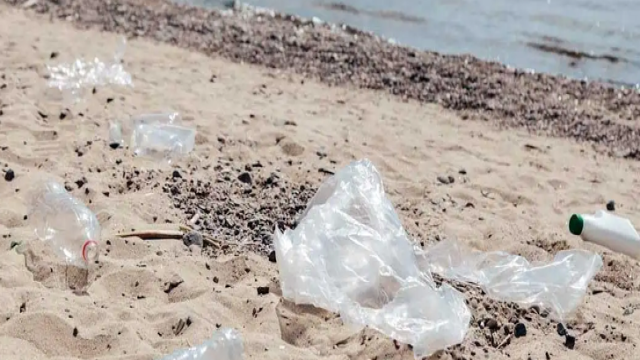
Chattogram, Aug 14 (V7N) – Two-year-old Arsha walks hand in hand with her father along Cox's Bazar beach, her face lighting up with wonder as her tiny feet touch the wet sand beneath a moonlit sky. But beneath her feet and scattered across the shoreline lie plastic bottles, cups, food packets, polythene bags and thousands of other toxic wastes – slowly poisoning the very environment that sustains life.
Beach cleaning workers say they collect 60 kilograms of discarded plastic water bottles, more than 5,000 single-use tea cups and masks, and over one truckload of chips and biscuit packets, coconut shells and polythene every day from the sandy shore, according to a BSS report.
Researchers warn that plastic discarded into the sea never disappears. Over time, sunlight, saltwater and waves break it down into microplastics and even smaller nanoplastics that remain in seawater and on the seabed. Marine animals mistake them for food, and when these animals enter the human food chain, the plastics pose serious risks to human health.
Microplastics have already been detected in human blood, lungs, placenta and other organs in various studies. Scientists fear long-term exposure may contribute to serious health risks, including cancer, hormonal and reproductive problems, weakened immunity and neurological complications.
Arsha's father Asraf, an officer of a finance company, was deeply disturbed to see so much plastic along the beach. "The damage being caused to the beach by careless tourists needs to be brought under control. Otherwise, the impact of plastic pollution on marine biodiversity will continue to increase," he said.
Prof. Dr. Kazi Md. Barkat Ali, chairman of Geography and Environmental Studies Department at Chittagong University, said, "Tourists are throwing plastic indiscriminately on the beach. These plastics do not decompose. They contain various chemicals. These eventually enter the sea and the stomachs of fish. As a result, the ecosystem is being destroyed and diseases are emerging. Due to the indiscriminate use of plastic and the lack of proper management, a dire warning sign will soon confront us."
Bangladesh is already highly vulnerable to climate change, facing rising sea levels, coastal erosion and increasing cyclone risks. Plastic pollution has now been added to these challenges. The production, transportation and burning of plastic generate greenhouse gases accelerating global warming, while plastic accumulating on beaches weakens coastal ecosystems and disrupts nature's balance.
Plastic degrades soil and water quality, obstructs drains causing water logging, and burning it releases toxic chemicals including dioxins into the air, increasing respiratory problems, cancer and other diseases. The pollution also damages beach beauty, putting the tourism industry at risk and affecting local livelihoods and the economy.
Nazrul Islam, organising secretary of the Cox's Bazar branch of Bangladesh Poribesh Andolon (BAPA), said, "Cox's Bazar sea beach is being destroyed. Particularly, there are many shops at Kalatali, Sugandha and Laboni points, where food is regularly sold in plastics. These eventually reach the sea and cause the deaths of fish, turtles, corals and other marine creatures. The district administration, Fisheries Department and other concerned authorities need to act responsibly to control the situation."
Environmental activists say single-use plastics must be reduced, dumping waste on the beach must stop, adequate waste management must be ensured, regulations must be enforced and environmental awareness among tourists must be increased. Businesses, tourists, local residents and the administration – all stakeholders must take responsibility.
Cox's Bazar Deputy Commissioner Md. A. Mannan said janitors are working to keep the beach clean, dustbins have been installed at different points, awareness campaigns are ongoing, and local shops have been instructed not to use plastic or polythene. "If tourists become more conscious, it will be easier for us to keep the sea and beach clean and beautiful," he said.
Yet Arsha knows nothing of these situations. Today, the sea is a source of joy for her, the waves are her friends and the beach is a place where she discovers a new world. But what will Cox's Bazar look like when she grows up? Standing in the darkness of night, Arsha may not know that the plastic scattered around her is not merely destroying today's beauty – it is destroying tomorrow's world.
end/siu/rh