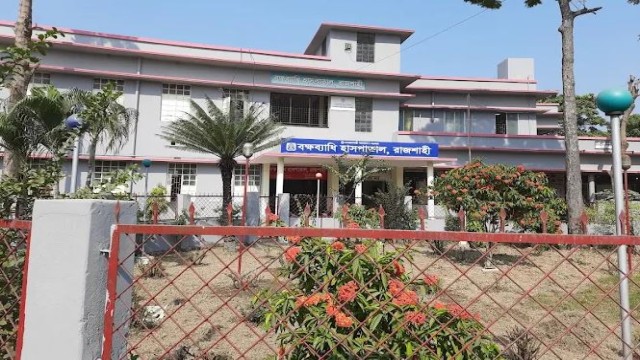
Rajshahi, Nov 15 (V7N) – Rajshahi Medical College Hospital (RMCH), the principal healthcare facility in northern Bangladesh, is struggling to cope with an overwhelming influx of patients, with daily admissions exceeding twice its operational capacity. At the same time, severe shortages of saline and syringes have been reported at the hospital and pharmacies across Rajshahi city over the past month, adding to the difficulties faced by patients and their families.
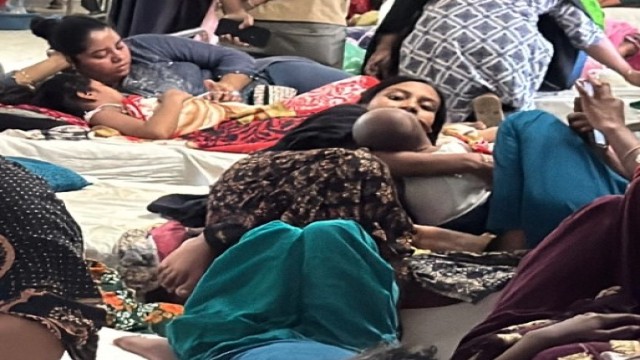
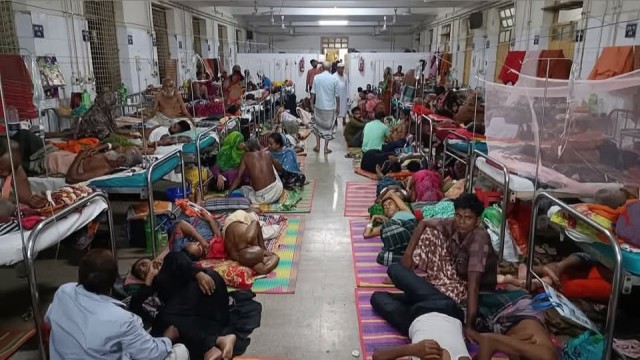
Although the hospital has administrative approval for 1,300 beds, only 1,243 are currently operational. The facility regularly accommodates more than twice that number of patients, forcing many to receive treatment on ward floors, corridors and verandas due to a lack of beds.
The hospital began its journey in 1965 with 530 beds. Its current approved capacity includes 1,200 general beds and 100 intensive care unit (ICU) beds. Hospital authorities expect to make the remaining ICU beds operational by January or February next year.
However, the hospital's administrative structure remains based on its old 530-bed organisational framework, creating a significant gap between its expanded infrastructure and service capacity.
The number of admitted patients stood at 3,280 on October 21 and increased to 3,317 by October 29, according to hospital data. This is approximately 2.7 times the number of operational beds, leaving more than 2,000 patients without regular beds.
The hospital's outpatient department also serves an average of 5,804 patients daily.
Relevant sources said the number of patients at the hospital has nearly doubled over the past five years. More than 80 percent of patients come from outside Rajshahi, including Chapainawabganj, Naogaon, Natore, Pabna, Kushtia, Chuadanga, Jhenaidah, Jashore and Bogura, as well as 16 to 17 other districts.
Those concerned believe the heavy pressure on RMCH is partly due to limited healthcare facilities at upazila and district levels and the absence of an effective referral system.
Shortages of medicines and medical supplies
Supplies of essential medical items, including gloves, saline, syringes and cannulas, remain inadequate compared with the hospital's patient load.
Dr Shahadat Mahmud Tupu, president of the Intern Doctors' Council, said patients' relatives often have to purchase medicines and medical supplies from outside because the hospital cannot provide them in sufficient quantities.
Limited operating facilities and a shortage of standard medical equipment have also affected surgical services. According to him, surgery in the surgery and gynaecology departments is being conducted four days a week instead of seven due to these limitations.
Hospital authorities said supplies of medicines and medical equipment had begun reaching different wards. They are maintaining regular communication with the Ministry of Health and the Directorate General of Health Services to address the shortages of saline, syringes and other essential items.
Saline and syringe shortages in local pharmacies
The shortage is not limited to the hospital. Pharmacies and drugstores in the city's Laxmipur and Boro Mosque areas are also experiencing shortages of saline and syringes.
Local traders said they had placed orders with pharmaceutical companies nearly a month ago but were still unable to obtain supplies according to demand.
They attributed the situation partly to a sudden rise in demand for saline and related medical products amid an increase in dengue and other illnesses.
Relatives of patients said they were facing difficulties finding prescribed saline and syringes even at pharmacies near the hospital.
One patient's relative in the Boro Mosque area said the prescribed saline and syringes were unavailable at nearby pharmacies, making it difficult to collect them from outside because of limited company supplies.
Another patient's relative in the Laxmipur area said families were being forced to visit multiple pharmacies in search of essential medical items. They called for urgent steps to restore normal supplies.
Staff shortages add to pressure
Hospital staffing data show that 315 doctors are currently working against 333 approved posts, while 1,222 nurses are employed against 1,224 sanctioned positions.
However, 19 of the 175 third-class employee posts and 279 of the 434 fourth-class posts remain vacant. The shortage of fourth-class employees has particularly affected cleaning, patient transportation and routine hospital management.
Patients reportedly have to wait an average of 30 to 40 minutes to receive services at the emergency department.
Dr Sheikh Shamim Ahmed, spokesperson for the hospital, said that although the facility had expanded from 530 beds to an administratively approved capacity of 1,300, its staffing structure had not been updated accordingly.
As a result, doctors, nurses and other employees are working under increased pressure within the old organisational framework, he said.
He added that a proposal to fill the staffing gaps had been sent to the ministry. The hospital is also taking steps to recruit daily-wage workers to maintain cleaning services.
Healthcare experts and concerned stakeholders believe that strengthening upazila health complexes and district hospitals, alongside introducing an effective referral system, is necessary to reduce the influx of patients from 16 to 17 districts.
They also emphasise the need for a long-term, time-bound plan to address shortages of beds, medical staff, medicines and modern equipment at Rajshahi Medical College Hospital to improve patient care and ease the burden on families.
END/MRA/SMA/