Patharghata, Nov 15 (V7N) – Nineteen years after devastating Cyclone Sidr struck Bangladesh's southern coast on November 15, 2007, the scars of the disaster remain deeply etched in the lives of people in Patharghata, Barguna. While memories of lost relatives and destroyed homes continue to haunt survivors, many coastal residents are still living in fear of another disaster because of vulnerable and poorly protected embankments.
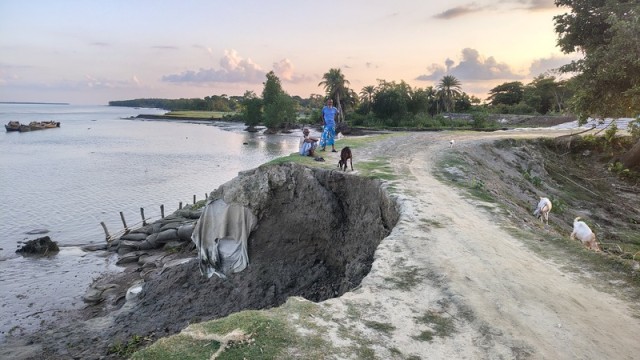
Around 19 kilometres of embankments in Patharghata are considered vulnerable, leaving riverbank communities exposed to the threat of river erosion, cyclones and tidal surges.
In some places, river erosion has weakened the embankments, while other sections remain in poor condition. Whenever a cyclone or tidal surge threatens the coast, panic spreads among residents living along the riverbanks. Many fear that without strong and sustainable embankments, another major disaster could destroy their homes, agricultural land and livelihoods.
Residents are therefore demanding permanent and durable embankment construction and rehabilitation rather than temporary repairs.
On the night of November 15, 2007, Cyclone Sidr devastated Patharghata and other coastal areas of Barguna. According to official figures, 349 people died in Patharghata and a total of 1,345 in Barguna district.
The powerful cyclone and tidal surge destroyed homes, farmland and sources of livelihood, leaving thousands of families destitute. Bodies were scattered across the coastal region, while many families lost their sole breadwinners.
Even after 19 years, the fate of 91 fishermen from Patharghata who went missing during Sidr remains unknown. Their wives, children and relatives are still waiting for answers, uncertain whether their loved ones survived or died.
The absence of death certificates for the missing fishermen has also created difficulties for their families in dealing with land-related matters and accessing government assistance.
Many affected households continue to struggle. In some families, parents have lost their only source of support, while in others, missing fishermen were the sole earners. Some elderly parents remain bedridden with grief, while women have had to shoulder family responsibilities and go fishing in rivers to support their children.
Rahim, who lost two brothers in the cyclone, recalled the tragedy.
"A trawler carrying 17 fishermen, including my two brothers, went missing during Sidr. We have never received any information about them. We still do not know whether they are alive or dead," he said.
For families who lost loved ones, embankments are more than just barriers against water. They represent their last line of defence for protecting lives, homes, farmland and livelihoods.
Residents believe strong and sustainable embankments could significantly reduce the entry of tidal surge water into settlements and limit damage during natural disasters. They are urging the authorities to permanently rebuild and strengthen vulnerable sections before another major cyclone strikes.
Abdul Hannan Pradhan, chief executive engineer of the Barguna Water Development Board, said approximately 19 kilometres of embankments in Patharghata were vulnerable.
He said the authorities were aware of the high-risk areas affected by river erosion and had plans to construct sustainable embankments there.
"If the government approves the proposed plan, construction of durable embankments will help protect coastal people's lives and property, agricultural land and homes from cyclones and other natural disasters," he said.
Nineteen years after Sidr, November 15 remains more than an anniversary for the people of Patharghata. It is a day of mourning for lost relatives and a reminder of the fear of losing everything once again.
Learning from the devastation of 2007, coastal residents are now calling for urgent and permanent construction and rehabilitation of the 19 kilometres of vulnerable embankments. They say they do not want to lose more loved ones or the little shelter and security they have left.
END/MRR/SMA/