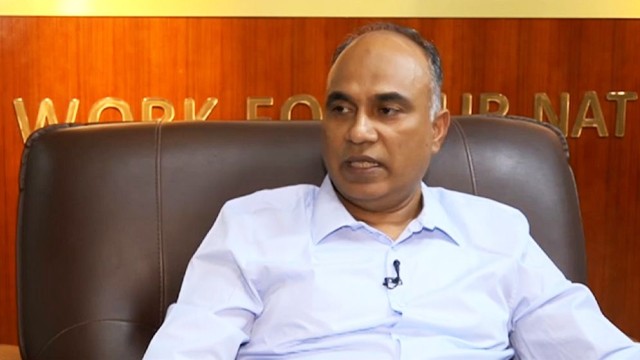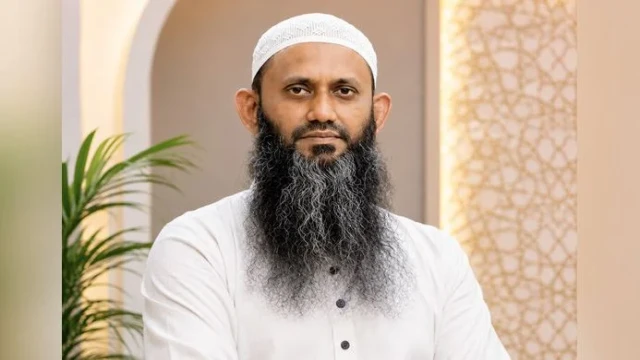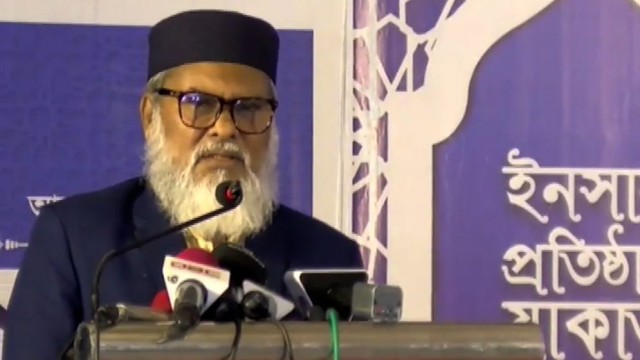
Dhaka, Jan 31 (V7N) — Religious Affairs Adviser Dr. A. F. M. Khalid Hossain on Saturday said that many people in Bangladesh do not pay zakat, and those who fail to do so despite being eligible cannot be considered true believers.
“Those who do not pay zakat and do not follow the principles of Islam according to the Quran and Hadith are not believers; they are hypocrites. Those who pay zakat are true believers,” he said.
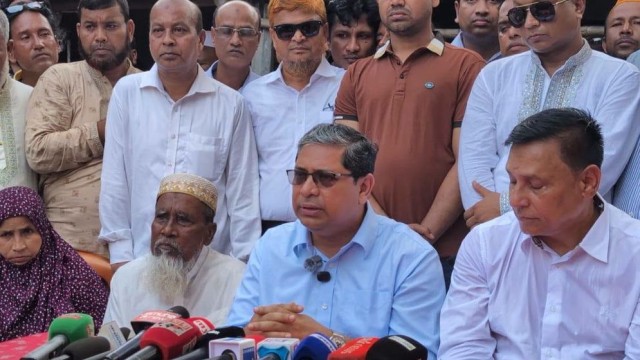
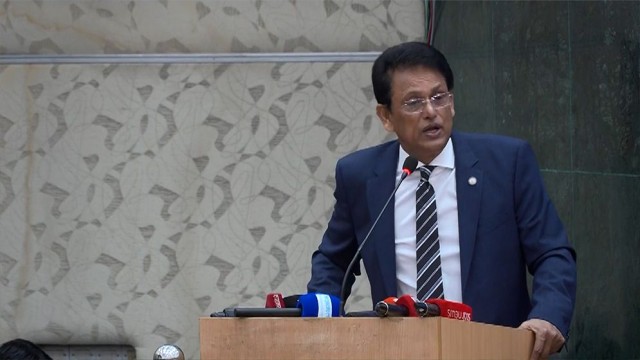
The adviser made the remarks while speaking at the inauguration of the 14th Zakat Fair–2026 at the Officers Club in the capital on Saturday morning.
Dr. Khalid Hossain said the government-run Zakat Board under the Islamic Foundation currently collects around Tk 11 crore annually. “Although our collection is limited, there is clarity and transparency in our system. We distribute 80 percent of the collected funds locally through district administrators and upazila nirbahi officers, while 20 percent is distributed centrally,” he said.
He added that the collection amount remains low compared to private initiatives. “In this regard, the Center for Zakat Management (CZM) is about ten times ahead of us,” he noted.
The religious adviser also criticized the practice of paying zakat arbitrarily. “Many wealthy people do not calculate zakat properly and instead allocate a lump sum. Many do not realize the severe punishment mentioned in Islam for failing to pay zakat. Everyone will have to answer to Allah for this,” he warned.
Referring to social issues, Dr. Khalid Hossain said it is unfortunate that sex work is recognized as a profession. “We chase and beat sex workers but never think whether they have food to eat. Poverty forces many into such professions. If we can ensure food and employment, they can be freed from this primitive occupation, and zakat can play a key role in that transformation,” he said.
He further emphasized that institutionalizing zakat is essential for poverty alleviation. “The contribution of the Center for Zakat Management is unavoidable in this process. If zakat is established effectively at the state level, it can become a powerful system to eradicate poverty,” he added.
END/SMA/AJ