LONDON, March 20, (V7N) — Six major international powers said Thursday they were prepared to “contribute to appropriate efforts” to ensure safe passage through the Strait of Hormuz, though three of them stressed that any such initiative could only take place after a ceasefire in the Middle East war.
Britain, France, Germany, Italy, Japan and the Netherlands issued a joint statement welcoming “the commitment of nations who are engaging in preparatory planning” and condemning “in the strongest terms recent attacks by Iran on unarmed commercial vessels in the Gulf.”
But Italy, Germany and France later clarified that they were not considering immediate military involvement. Any multilateral mission, they said, would require a truce and an international mandate.
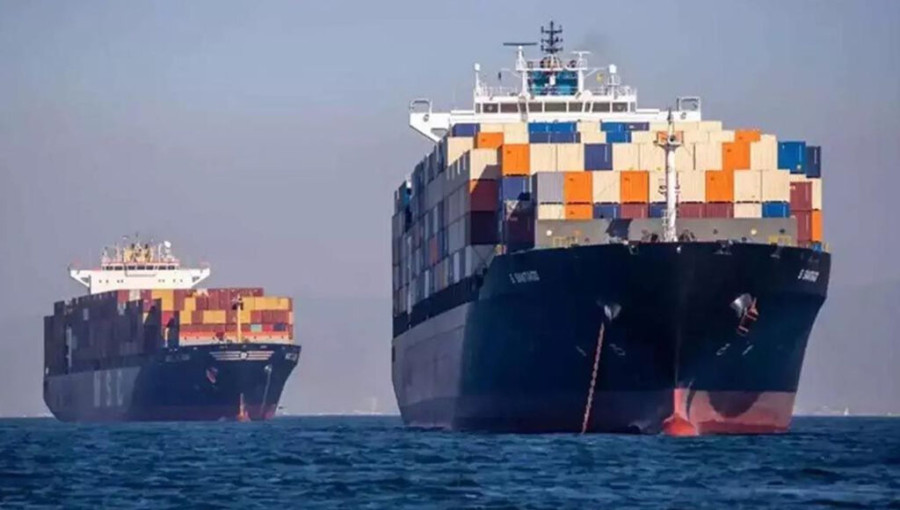
The declaration comes as an effective Iranian blockade has paralysed shipping through the strategic waterway, which normally carries around 20 percent of global crude oil and liquefied natural gas. Since the war erupted on February 28 — when the United States and Israel began bombing Iran — Tehran has retaliated with strikes across the Gulf.
According to the International Maritime Organization, 23 commercial vessels, including 10 tankers, have reported attacks or incidents, leaving around 20,000 seafarers stranded on some 3,200 ships west of the strait.
“We express our deep concern about the escalating conflict,” the six nations said. “We call on Iran to cease immediately its threats, laying of mines, drone and missile attacks and other attempts to block the Strait to commercial shipping.” They warned that the global impact of Iran’s actions would be felt “especially [by] the most vulnerable.”
US President Donald Trump has urged allies and NATO to help reopen the strait, but European and Asian partners have resisted committing forces while fighting continues.
Italy’s Defence Minister Guido Crosetto said the joint statement should not be interpreted as a military deployment. “No entry into Hormuz without a truce and a comprehensive multilateral initiative,” he said, adding that the United Nations should provide the legal framework.
German Defence Minister Boris Pistorius said any German role would depend on conditions after a ceasefire and would require parliamentary approval.
French President Emmanuel Macron said Paris had begun sounding out permanent members of the UN Security Council about establishing a UN‑backed framework for future navigation security — but only once hostilities end. “We have initiated an exploratory process,” he said after an EU summit in Brussels.
A UK defence official said the threat level was so high that few nations were willing to send warships into the strait at present. London has instead deployed a “small number” of military planners to US Central Command to assist with scenario planning for “whatever comes next.”
END/WD/RH/