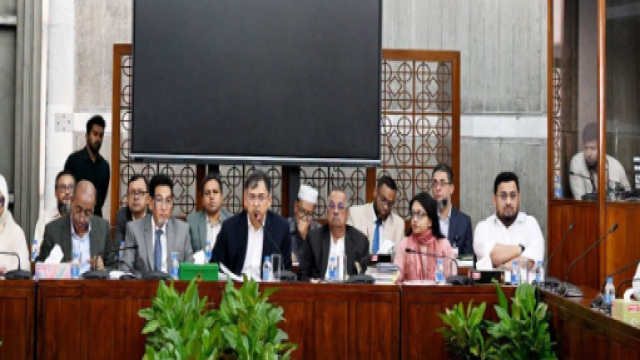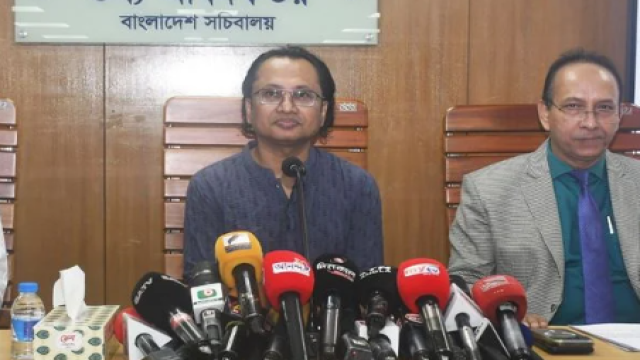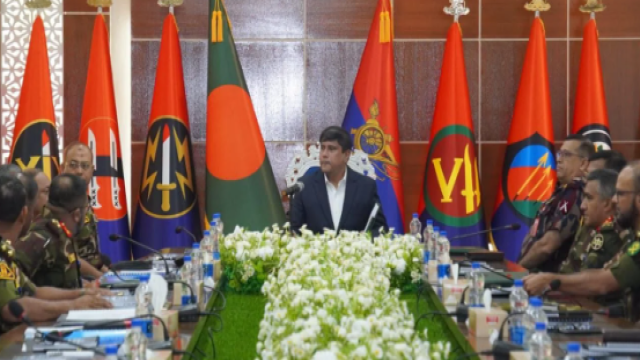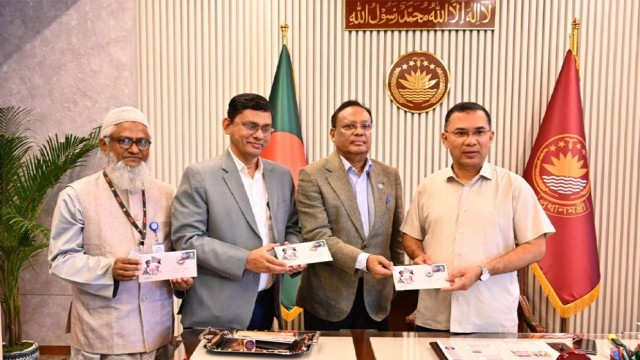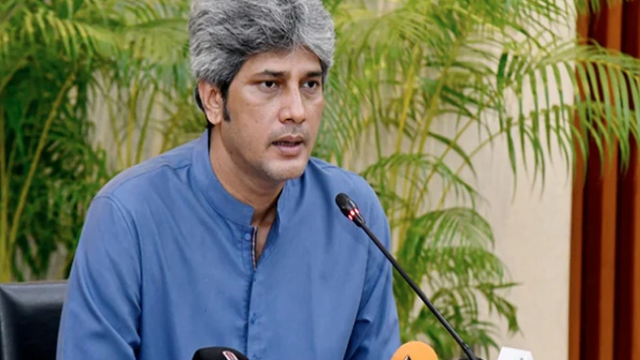
Dhaka, November 4, 2026 (V7N) – The government is taking steps to accelerate development activities in the interest of the people while maintaining scrutiny, accountability and financial discipline, State Minister for Planning Md Zonayed Abdur Rahim Saki said Wednesday.
He said the government had no intention of approving development projects under any external pressure, adding that project selection and implementation would depend on public needs and national priorities.
"The projects are not being taken up under any pressure. Those are being formulated solely in response to the needs of the people," he told journalists at the NEC Conference Room in the city's Sher-e-Bangla Nagar area after a meeting of the Executive Committee of the National Economic Council (ECNEC). Responding to questions about the approval of major projects, including the Primary Education Development Programme-5 (PEDP-5), without their inclusion in an earlier publicised project list, the state minister said the government prioritised essential development interventions. He said projects such as metro rail were important for improving Dhaka's transport system, while investment in primary education was essential for building a skilled and capable future generation.
"The important question is not whether a project is mega or non-mega. What matters is whether it meets the needs of the people and contributes to national development," he said.
Explaining the PEDP-5 project, he said the programme combined several individual interventions under a single comprehensive framework. He said implementing those activities separately through multiple projects could make them appear less significant in terms of individual allocations, but bringing them together under one programme had resulted in a large overall project.
The state minister said the government wanted to expedite development activities because lengthy project preparation and approval processes often delayed implementation. However, he stressed that expediting development work would not mean bypassing established procedures or compromising financial accountability. "We are trying to accelerate development activities as much as possible. But we do not want to bypass any process or allow public money to be wasted. We want to ensure that the maximum possible benefits reach the people," he said.
He explained that the Planning Commission and the ECNEC performed different stages of project scrutiny. The Planning Commission assesses project proposals and raises observations, while ECNEC members, including the Prime Minister, examine the proposals and provide further instructions before granting final approval. He said the Prime Minister's observations reflected the government's development priorities and the need to improve the quality of public investment.
The minister said the government had recently communicated 13 specific instructions to different ministries for incorporation into development project proposals. These instructions include provisions for renewable energy, facilities for persons with disabilities, appropriate environmental measures and clearer assessments of return on investment. He said the government wanted these considerations to become standard requirements in project preparation.
The state minister also said the government was strengthening financial scrutiny to prevent unnecessary expenditure and improve the quality of development spending. He said the government was working to introduce technology-based monitoring of project costs and strengthen the assessment of procurement prices.
Responding to questions about financing large projects, he said the government had prioritised financing arrangements in its overall economic planning despite global economic pressures and domestic financial challenges. He said the government had expanded its Annual Development Programme (ADP) and was working to increase domestic revenue through automation and improved tax administration.
The state minister acknowledged that financing development projects remained challenging but said the government was pursuing an expansionary development approach to maintain economic activity and meet public needs. He also explained that the government was continuing existing projects through revised allocations and extended timelines where similar activities remained necessary.
As an example, he referred to the third revised version of the Priority-Based Important Rural Infrastructure Development Project, saying the government wanted to complete ongoing rural infrastructure activities without unnecessary delays.
He said the government would continue to scrutinise project costs, procurement and implementation arrangements to ensure greater accountability. Saki expressed the hope that the new monitoring and cost-assessment mechanisms would establish stronger institutional checks and balances in public investment. He said the government wanted to create a development expenditure system that would ensure greater transparency and accountability than ever before.