Tokyo, October 27, 2026 (V7N) – Bangladesh and Japan on Tuesday agreed to transform their flagship Bay of Bengal Industrial Growth Belt (BIG-B) initiative into a broader strategic cooperation framework, "BIG-B for Shared Prosperity," to accelerate industrialisation, strengthen connectivity and attract investment.
The upgraded initiative will integrate power, energy, deep-sea port, industrial and information and communication technology (ICT) infrastructure to establish Bangladesh as a major industrial value-chain hub and a strategic gateway for regional and international trade.
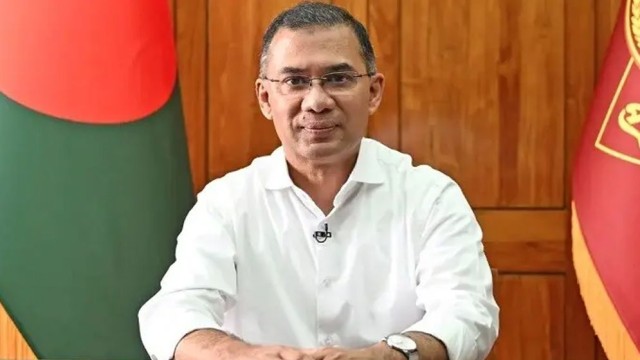
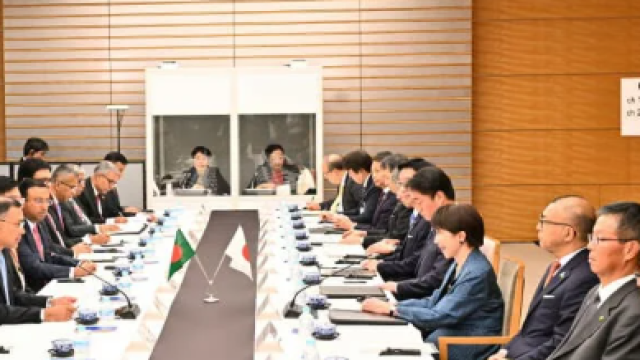
The landmark decision came during bilateral summit talks between Prime Minister Tarique Rahman and his Japanese counterpart Sanae Takaichi in Tokyo on the second day of the Bangladesh premier's official visit to Japan from October 26 to 29.
According to a joint statement issued following the summit, the two leaders agreed to expand the scope of BIG-B to address emerging economic opportunities, strengthen supply chains, respond to technological transformation and navigate growing geopolitical uncertainties. The two prime ministers identified four priorities under the new framework: enhancing connectivity, strengthening resilience against natural disasters and geopolitical uncertainties, promoting public-private partnerships for economic growth and rulemaking, and expanding cooperation for peace and stability.
A major component of the upgraded BIG-B initiative will be the development of the Matarbari-Maheshkhali area into an integrated logistics, energy and industrial hub, anchored by the Matarbari Deep-Sea Port. The two leaders reaffirmed their commitment to advancing infrastructure and connectivity projects that would strengthen Bangladesh's position as a regional trade and investment gateway.
The joint statement emphasised the importance of integrating deep-sea port facilities with industrial zones, power and energy infrastructure, and modern transport networks to support industrial value chains. The leaders also expressed their intention to discuss future cooperation concerning the operation and management of Matarbari Deep-Sea Port.
Recognising Bangladesh's strategic geographical location between South and Southeast Asia, they agreed that enhanced connectivity would contribute to sustained economic growth and wider regional prosperity.
The upgraded framework also places considerable emphasis on improving Bangladesh's aviation and urban transport infrastructure. The two prime ministers agreed to proceed with preparatory work for the early operationalisation of the third terminal at Hazrat Shahjalal International Airport in Dhaka, and expressed their intention to advance the early construction of Dhaka's Mass Rapid Transit (MRT) lines and explore further cooperation in transport infrastructure.
The summit also highlighted the growing importance of Japanese private investment in Bangladesh's economic development. Prime Minister Takaichi welcomed the projection of Japanese private investment of up to one trillion yen in Bangladesh over the next five years, with the potential to generate approximately 200,000 jobs. She commended Prime Minister Rahman's administration for its efforts to attract foreign direct investment and improve the country's business environment.
The leaders welcomed major investments announced in connection with the visit and agreed to strengthen economic cooperation through more resilient supply chains, improved connectivity and a predictable investment climate. They identified manufacturing, food and agriculture, ICT and pharmaceuticals as priority sectors for developing complementary and resilient supply chains.
Takaichi emphasised the importance of further improving Bangladesh's investment environment, while Rahman highlighted his government's initiatives to promote transparency, predictability and business-friendly regulations. The Bangladesh premier reaffirmed his commitment to facilitating investment by improving operational procedures relating to taxation, customs clearance, remittances and licensing.
The leaders welcomed the signing of a Memorandum of Cooperation between Japan's Ministry of Economy, Trade and Industry and Bangladesh's Economic Relations Division to strengthen economic relations and improve the business environment. They also welcomed cooperation agreements in agriculture, fisheries and livestock to encourage business partnerships and attract Japanese investment.
To maintain the momentum, the two prime ministers expressed their willingness to arrange a Japanese business delegation to Bangladesh and hold further economic dialogues. They also agreed to promote investment through the Japan-Bangladesh Joint Public-Private Partnership Platform and the Bangladesh Special Economic Zone.
Rahman thanked Takaichi and the Japanese people for their hospitality and invited the Japanese prime minister to visit Bangladesh at a mutually convenient time.