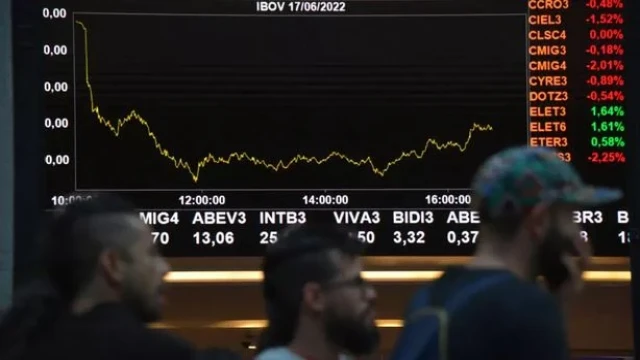
Brasília, October 26, 2026 (V7N) – The Brazilian stock market plummeted nearly 17 percent at opening on Monday, following the re-election of President Luiz Inacio Lula da Silva.
The leftist leader won 51.8 percent of the vote to 48.2 percent for his right-wing challenger Flavio Bolsonaro, the son of jailed ex-leader Jair Bolsonaro.
The sharp drop in the Ibovespa index triggered a 30-minute suspension of trading, while the US dollar surged 12 percent against Brazil's currency, the real. The decline activated a "circuit breaker" mechanism provided for "periods of sharp market decline," according to a statement.
Brazilian stocks had surged to record highs following Bolsonaro's first-round win earlier this month. On Monday, they dropped below pre-election levels.
Other critical moments that have previously triggered the circuit breaker mechanism include the subprime crisis in the United States in 2008 and the Covid-19 pandemic in 2020.
Lula is concluding his third term with record employment rates and controlled inflation, although with rising public spending and growing debt. Brazilians complain about the loss of purchasing power while authorities are concerned about household indebtedness. The country maintains one of the highest benchmark interest rates in the world in an attempt to control rising prices.
The market reaction underscores investor concerns about fiscal policy and spending under a new Lula term. Trading resumed after the 30-minute halt, with analysts expected to monitor currency and bond markets closely in the coming days for signs of sustained volatility.