PABNA, APR 17 (V7N) - The Bangladesh Atomic Energy Regulatory Authority has finally issued a license for fuel loading into the first unit of the Rooppur Nuclear Power Project in Pabna, after passing all the testing and inspection steps.
Dr. Mahbubur Rahman, Project Director of Nuclear Regulatory Infrastructure, the main branch of the Bangladesh Atomic Energy Regulatory Authority (BAERA), which is responsible for approving licenses, confirmed this information on Thursday (April 16) night.
He said, "There is no more problem from our side. We have given the commissioning license for fuel loading. Now the government will fix the date for the inauguration of fuel loading. Fuel loading will start accordingly."
Authorities have announced the possibility of inaugurating fuel (uranium) loading at the first unit of the Rooppur Nuclear Power Plant by the end of this April.
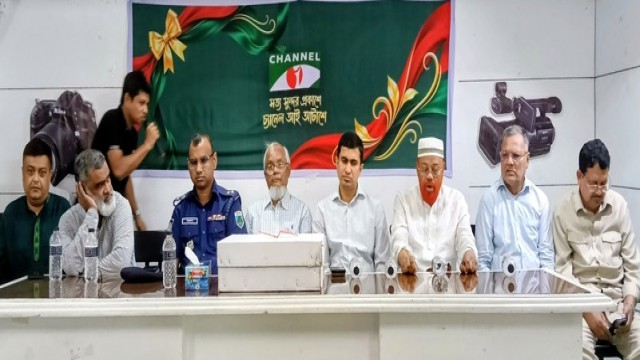
Bangladesh Atomic Energy Regulatory Authority Chairman Mahmudul Hasan said, "Earlier, the ministry decided to inaugurate on April 7, but some critical issues came to the fore. Time was given to resolve them. We are trying hard with honesty to ensure maximum safety. Now the position is good. Therefore, since we all agree on the fuel loading (commissioning) of the first unit, the license has been granted."
In addition, authorization has been given to Nuclear Power Plant Company Bangladesh Limited (NPCBL) as an operator to operate the plant. He said that 59 personal licenses will also be issued to NPCBL employees.
Nuclear Power Plant Company Bangladesh Limited (NPCBL) Managing Director Dr. Jahedul Hasan confirmed the receipt of fuel loading license, appointment of NPCBL as operator and issuance of personal licenses to 59 people on Thursday night, saying that important preparatory work has already been successfully completed. Fire safety related NOC (No Objection Certificate) has been obtained. Preparations for physical startup i.e. fuel loading have been taken with utmost importance on safety, security and safeguards. He expressed hope that it will be possible to supply the electricity generated in Rooppur to the national grid in stages by December.
Background: The fuel (uranium) loading activities at the first unit of the Rooppur Nuclear Power Plant, scheduled for April 7 of this month, have been postponed due to the lack of a license. A letter from the Ministry of Science and Technology on March 15 of this year had announced the inauguration of fuel loading at the first unit on April 7.
The country's most expensive project has now reached a visible stage after enduring many complications over a long period of time. The start of production has been delayed several times before. Although uranium fuel for the first unit was brought to the country from Russia about two years ago, it has not yet been used.
Before fuel loading, it is mandatory to obtain a license from the Bangladesh Atomic Energy Regulatory Authority under the supervision of the International Atomic Energy Agency.
Incidentally, the Rooppur Nuclear Power Plant is being built under an agreement with the Russian Federation. As per the agreement, Russia is providing financing and technical assistance to the project. Construction work began in 2017. The construction cost of the main project is estimated at 12.6 billion US dollars, which is about 113 thousand crore taka.
Currently, the construction of the first unit of the Rooppur Nuclear Power Plant has been completed and more than 70 percent of the work on the second unit is complete. Although the commissioning was initially scheduled for 2022, it has been delayed by three years. Last year, Bangladesh and Russia agreed to extend the deadline to complete the work of the two units by the end of 2027.
According to project sources, the construction of the second unit is likely to be completed by the end of next year. Overall, the entire project is likely to be completed by the end of 2028. Accordingly, the first 1,200 MW of electricity generation is expected to start from Rooppur early next year. Another 1,200 MW of electricity is expected to be supplied to the national grid by the end of 2028.
END/SRP/RH