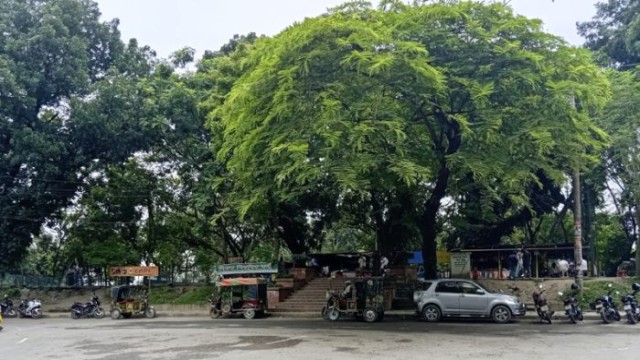
Rajshahi, July 25 (V7N) – The Wildlife Advisory Council under Bangladesh’s Ministry of Environment, Forest and Climate Change has given policy approval to declare Shimla Park, one of Rajshahi city’s major green spaces, as a Special Biodiversity Conservation Area.
The decision aims to protect the park’s natural ecosystem and wildlife while promoting environmental conservation, research, education and nature-based tourism. Visitors have been urged to follow specific guidelines to preserve the ecological balance of the area.
According to the Rajshahi University Bird Club, more than 200 species of birds are found at Shimla Park throughout most of the year. The park provides a habitat for numerous native and migratory birds, including ducks, doves, cuckoos, swallows, sandpipers, herons, kingfishers, woodpeckers, drongos, parrots, mynas, robins, bulbuls, wagtails, sunbirds and other species, particularly during the monsoon and winter seasons.
The park is also home to around 20 species of mammals, including rabbits, squirrels, civets, fishing cats, mongooses, foxes and various species of bats. In addition, the area supports 24 species of reptiles and 13 species of amphibians.
The decision to grant conservation status was approved at the 41st meeting of the Wildlife Advisory Council. The council also approved similar recognition for Borobila Beel in Bogura and Babudaying tourism and picnic area in Rajshahi-Chapainawabganj.
The designated conservation zone at Shimla Park will cover around 17 acres, stretching from the area near the Border Guard Bangladesh (BGB) camp to the city protection embankment beside the Deputy Commissioner’s residence.
Environmental experts said protecting such a natural refuge within a rapidly expanding city like Rajshahi would help maintain ecological balance while creating new opportunities for wildlife studies, environmental education and eco-tourism.
To protect the biodiversity of the area, authorities have advised visitors to maintain silence, avoid disturbing wildlife movement, refrain from damaging bird nests, avoid collecting fallen trees or branches, dispose of waste properly, keep a safe distance from animals, and report any hunting or habitat destruction to the administration or forest department.
Authorities have also recommended restricting visitor access during the wildlife breeding season from May to July to ensure safe reproduction and habitat protection.
Several activities have been discouraged inside the conservation area, including playing loud music, creating noise through group gatherings, installing decorative lighting, dumping plastic waste, arranging picnics, cooking or lighting fires, cutting trees, hunting wildlife, setting up shops, grazing livestock and damaging vegetation.
At a meeting held on July 8 under the chairmanship of Rajshahi Divisional Commissioner Dr A.N.M. Bazlur Rashid, residents were urged to act responsibly to protect Shimla Park’s biodiversity.
Officials said collective awareness and responsible behaviour from visitors and local communities would be essential to ensure the long-term protection of the newly designated biodiversity conservation area.
END/MRA/SMA/