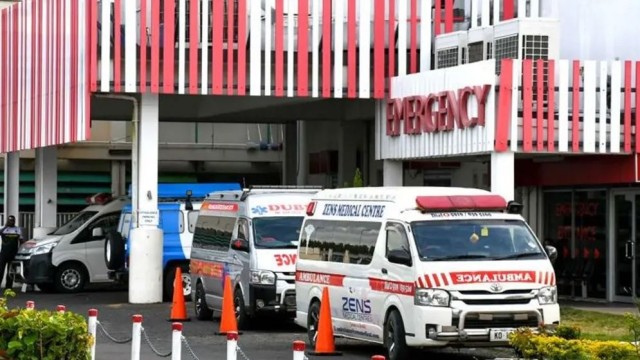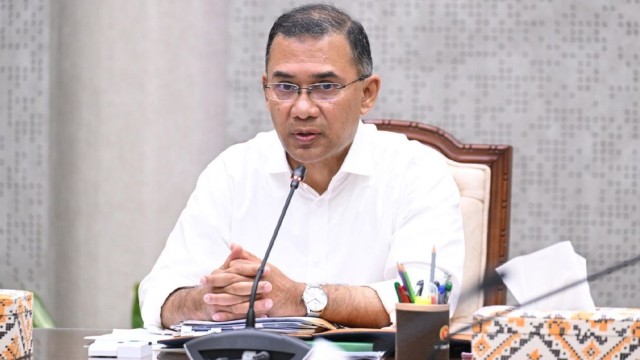
Dhaka, Jul 11 (V7N) — Prime Minister Tarique Rahman on Saturday described Dhaka Medical College and Hospital (DMCH) as a "living witness to history," praising its role in Bangladesh's major democratic movements while announcing a series of initiatives aimed at strengthening the country's healthcare system.
Speaking at the inauguration of DMC Day-2026 and a tree plantation programme at Dhaka Medical College, the Prime Minister said the institution had played a historic role in the Language Movement of 1952, the Liberation War of 1971, the pro-democracy movement of 1990, and the July 2024 mass uprising.
"During the July 2024 movement, every doctor, officer and employee of Dhaka Medical College Hospital was deeply involved. They stood beside the injured and the families of those who were martyred, providing treatment and humanitarian support," she said.
The Prime Minister described doctors as the people's "greatest friends and a source of trust," noting that people turn to physicians in times of illness and crisis.
Reflecting on a personal experience, Tarique Rahman said renowned physicians in Bangladesh had treated her mother with exceptional dedication until her final moments.
"There were discussions about taking her abroad for treatment, but I believed that while advanced technology may have been available elsewhere, the compassion and humanity shown by our doctors could not be replaced. I remain sincerely grateful to them," she said.
Major healthcare initiatives
The Prime Minister announced several measures aimed at improving healthcare services across the country, including:
-
Strengthening security at hospitals by deploying 10 Ansar personnel to each hospital, including Upazila Health Complexes.
-
Initiating the recruitment of 5,000 MBBS doctors to improve patient care.
-
Expediting the appointment of nurses, medical technologists, pharmacists, midwives and other healthcare professionals to fill vacant positions.
-
Planning to recruit an additional 25,000 government midwives to enhance safe motherhood and newborn care services.
She also highlighted the need to strengthen healthcare facilities in rural areas, noting that although Bangladesh has nearly 600 upazilas, only five currently have 100-bed hospitals.
"More than 70 percent of our people live in villages and upazilas, while only 25 to 30 percent reside in urban areas. Therefore, expanding quality healthcare in rural Bangladesh is essential," she said.
Reducing overseas medical treatment
Concluding her address, the Prime Minister called on the country's present and future physicians to help build a healthcare system capable of retaining patients within Bangladesh.
"Every year, around five billion U.S. dollars leave the country for medical treatment abroad. Hundreds of thousands of people seek better healthcare overseas, resulting in a significant outflow of valuable foreign currency," she said.
"Let us build a healthcare system where the people of Bangladesh can confidently receive world-class treatment at home, reducing the need to travel abroad."
END/SMA/AJ