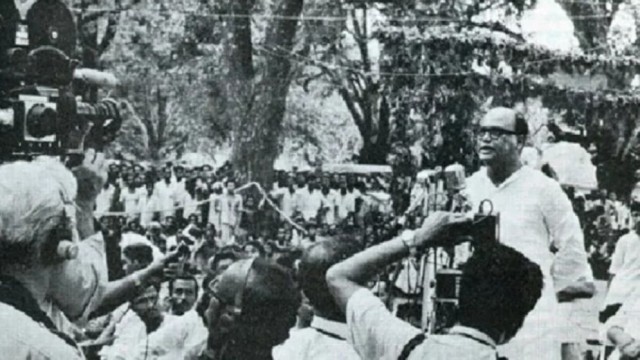
Dhaka, Apr 17 (V7N)- Today marks Mujibnagar Day, a historic milestone in Bangladesh’s struggle for independence. On this day in 1971, the first government of independent Bangladesh was formally sworn in at Amrakana in Baidyanathtala, then in Meherpur, laying the political and administrative foundation of the new nation.
Amid the turbulent days of the Liberation War, the formation of this provisional government played a crucial role in organizing resistance against the Pakistani military while also establishing a structured administrative framework for the emerging state. It also aimed to mobilize international support and recognition for Bangladesh’s independence.
The formal ceremony on April 17 began with the playing of the national anthem at Baidyanathtala. The newly formed government declared the country’s official name as the People’s Republic of Bangladesh.
As the undisputed leader of the nation, Sheikh Mujibur Rahman was declared the President, although he was imprisoned in Pakistan at the time. In his absence, Syed Nazrul Islam took oath as the Acting President. Tajuddin Ahmad was sworn in as the Prime Minister, leading an 11-member cabinet.
The Declaration of Independence, issued on April 10, was read out during the ceremony, serving as the constitutional foundation of the new state.
Meanwhile, M. A. G. Osmani was appointed as the Commander-in-Chief of the armed forces. To effectively conduct the Liberation War, the entire country was divided into 11 sectors, enabling organized military resistance against Pakistani forces.
The Mujibnagar Government also took on the critical responsibility of managing millions of refugees and building global public opinion in favor of Bangladesh’s independence.
Mujibnagar Day stands as a symbol of political unity, strategic leadership, and the formal birth of Bangladesh’s government during its war for liberation.
END/SMA/AJ