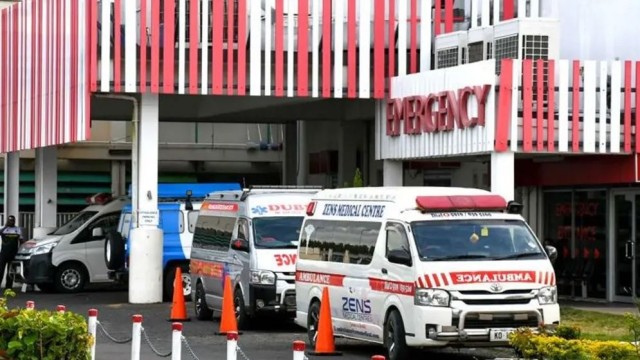
Suva, Sep 17 (V7N)- Fiji has declared a national emergency over a sharp rise in HIV infections, while the Pacific island nation is expanding testing, treatment and prevention services to contain the growing epidemic, according to the BBC.
Health officials say approximately one in every 60 adults in Fiji is now living with HIV, compared with one in 167 five years ago. The country has also recorded a rise in children dying from HIV-related complications.
Health experts and non-governmental organizations have linked the increase to several factors, including unsafe drug use, unprotected sex and the sharing of needles and syringes.
One practice drawing particular concern is known as “Bluetooth-ing” or “hotspotting,” in which people who inject drugs use blood taken from another person who has recently used drugs. Health experts say the practice can facilitate the transmission of blood-borne infections such as HIV.
Experts say economic pressures and limited access to sterile syringes are among the factors contributing to the practice. Groups of people may pool money to purchase drugs and share them, while shortages or difficulties obtaining syringes can lead to repeated use of the same equipment.
To address the crisis, the Fijian government plans to introduce a nationwide needle and syringe distribution program.
Health Minister Antonio Lalabalavu said 2,016 new HIV cases were detected in Fiji in 2025 alone. With the country's population below one million, he said measures that may have been appropriate during the early stages of the epidemic are no longer sufficient.
Lalabalavu said the country has sufficient stocks of syringes and needles and that legislative amendments will be presented to Parliament to enable the distribution program. He also urged people to undergo HIV testing.
The minister stressed that people living with HIV should not face shame, threats or social exclusion, warning that stigma and fear can prevent people from accessing testing, treatment and other essential services.
According to UNAIDS data cited in the report, only 39 percent of an estimated 9,100 people living with HIV in Fiji knew their status in 2025, while just 22 percent were receiving antiretroviral therapy.
UNAIDS Executive Director Winnie Byanyima described the situation as a warning that AIDS remains a global health challenge. She said the rapid changes that can occur in HIV epidemics highlight the need for countries to maintain health and community systems capable of responding to emergencies.
Jason Mitchell, head of Fiji's national HIV response task force, said it could take at least five years, and potentially longer, to bring the epidemic under control.
The situation in Fiji contrasts with the global picture, where about 78 percent of people living with HIV were receiving treatment in 2025, according to UNAIDS.
END/SMA/AJ