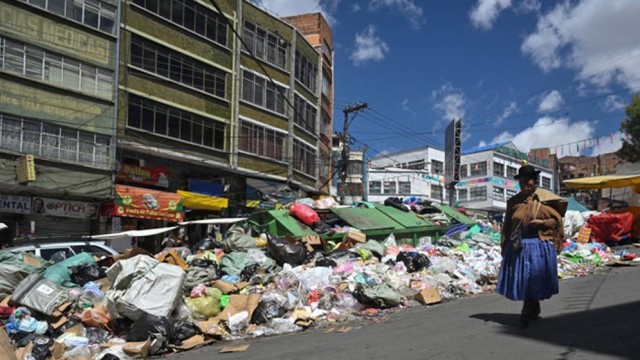
La Paz, Aug 26 (V7N)- Bolivia's capital La Paz has been severely affected by a two-week strike by sanitation workers demanding higher wages. With waste collection largely suspended, huge piles of garbage have accumulated across the city's streets, hospitals and commercial areas.
The prolonged accumulation of waste has created an unbearable stench and raised concerns about the spread of germs and disease. The presence of insects, stray animals and other pests around the garbage piles has further worsened the situation.
On Tuesday, sanitation workers employed by waste collection companies staged a protest outside La Paz city hall. Along with higher wages, they demanded a revision of waste management fees in line with rising fuel costs.
The workers said increased fuel prices have made it increasingly difficult to continue waste collection services under the existing wage and fee structure. They are demanding that both salaries and waste management charges be adjusted to reflect the increased cost of fuel.
Despite discussions between the authorities and the workers, no agreement has yet been reached. The protesters have therefore announced that their strike will continue until their demands are addressed.
Meanwhile, more than 4,000 workers and volunteers have been deployed to remove the accumulated waste from different parts of the city. However, authorities have been unable to restore waste management services completely.
The mayor of La Paz said only around 50 percent of the city's waste has so far been collected, leaving substantial quantities of garbage in various areas.
The prolonged sanitation crisis has also sparked public health concerns. Residents fear that accumulated waste, particularly around hospitals and densely populated neighborhoods, could create conditions for the spread of harmful pathogens.
Authorities are attempting to maintain waste collection through alternative arrangements while negotiations continue with the striking workers. However, if the dispute is not resolved soon, the sanitation and public health situation in La Paz could deteriorate further.
END/SMA/AJ